
Research trajectory map design
I wanted to communicate the firm geographical routing of my subject as well as invoking the historical, traditional and sometimes mythical themes I plan to be touching on. Taking influence from historical and fantasty maps, as well as a hand-drawn footpath map I have of my home town, I fabricated a village landscape with pen and ink.


I did a little research into traditional olde English village and area crests. I really like the iconography intrinsic in these designs, and how instantly recognisable the style is. More research required- I'd like to be able to deconstruct these via symbol. Intrinsic storytelling. Hells yeah.

This is the final thing, hopefully it should help me maintain the focus of my research: Investigating communal identity in rural British villages.
Here are some other rather lovely maps...


Some pretty nifty research tings....
 Yesterday, not really knowing where to begin with my research and desperately needing to leave my house, I headed off to the Tate Britain. Although not completely useful it at least set me on the right track. I have worked out that I am more interested in the PERCEPTIONS that we have about the countryside, the way its inhabitants DEFINE and PROJECT their identity, and what forms this takes.
I read an interesting piece courtesy the Museum of English Rural Life which attempts to tell the story of the 20th Century countryside through artefacts. [Ref. Onkar Kular- whose exhibition I Cling to Virtue blew my mind at the V&A last week] Rather than going down the usual plough wheels and farm machinery route however, they've chosen to exhibit some icons of the countryside that have transcended rural into mainstream culture. Examples are: 
The barbour jacket, "something that began as required wear for your average hunt follower, is now to be found being sported by Lily Allen and the like."
 The Land Rover: "which first appeared in 1948 as a general purpose farming vehicle but which subsequently managed to mutate into a fashionable vehicle of choice for the metropolitan elite."

...and the Aga, "which emanated from Sweden and was brought to this country in the 1920s. By the 1950s it had become indelibly associated with the farmhouse kitchen and from thence it became not only a style icon but a potent class symbol of the second half of the twentieth century."
I liked this statement best: "If the right Landrover or the right Aga come along with the right story, we’ll collect them." ...so I'll be making the trip down to this collection in Reading quite soon I think.
As well as this, my flatmate studies media, and happened to have a book entitled British Culture, which contains an essay entitled Rurality and English Culture by Alun Howkins. Convenient eh? From this essay, I've drawn out several of his key observations about how the British relate to ideals of rural life:

- The perception that rural life is in decline has rallied communities around a 'stirring and practically based image of threatened belonging'.
- Images of pastoral beauty have been ingrained in our national sense of identity chiefly by war propaganda. Posters and official war songs including 'There'll Always be England' and 'Bluebirds over the white cliffs of Dover', and the deliberate icon of the war memorial on the village green were used to rally England under a collective National ideology.
- Rural Britain is at the heart of an idealised vision of 'real' England. The countryside has certain aesthetic specifications: Rolling hills interspersed with woodland, hedgerows lining fields. "even more importantly its ideal social structure is village with its green, pub and church clustered together. Ideal architecture stone or half-timbered topped with thatch."
- "Aesthetics, ruralistic impulse and urban decline created our image of the 'real' England: “...even before the first World War, this ideal landscape had ceased to be an exact geographical location and had become instead a set of features by which rural beauty was defined. The bringing together, before the Great War, of an elite view of urban and rural decline, a ruralist impulse, and an aesthetic of the southern created an ideal of the countryside which, all too often and too easily become 'real' England.”
So the set of criteria for which we base our vision of the countryside- the 'heart of true England' is fabricated upon a set of upper-class aesthetics and lifestyle ideologies. I like the idea that there is a formula of British Countryside.
If the image of the real Britain is false, then is a community's collective identity just imagined too?
And so, Villages it is...
What a coincidence. Just last week I was thinking about villages: identity and stereotypes. We're assigned to open the paper and draw out an issue from any article we liked, and guess what?

So, I guess that's fate deciding that villages it is! So yesterday was spent trying to figure out exactly what it was about villages I was really interested in. And I settled on...
How do Rural Communities form an identity for themselves?
The article above featured brief stories about villages throughout the UK- their idicoyncracies, their bizarre customs and rituals, their historic signifigance...

I love the idea that communities come together under shared rituals. And in this case, the symbol of the Hare Pie is a rallying symbol for the whole village. When it was threatened one year by the village Pastor (because of its rumoured Pagan origins) the slogan 'No Pie, No Pastor' was found dawbed acr0ss the church walls the next day. A worthless pie, priceless in symbolic value.
My research routes will be:
- Weird Village Traditions
- Pastoral Iconography and Identity
- British rural perceptions and projections
Trials and Tribulations of a Foodie with a Handicap...

 I love food. Food food food food food. There is one difficulty: I can't eat any of it. I am lactose intolerant and have an insulin resistance, which means that I can't gain the nutritional benefit of any foods that cause my blood sugar to spike- foods that have a high Glicemic Index. This includes...
- Almost all carbohydrates: breads, potatoes, wheat products, rice, dried pasta, crackers and cereals. This includes gluten-free options. No joy.
- Sugars: including [obviously] sweets, cake, chocolates, and limiting my intake of some natural sugars like honey, dried fruit and juices.
- Saturated fats: Anything deep-fried or fried in excessive oils, and limiting intake of really fatty cuts of meat like patés, duck and goose, lamb and steak, or reconstituted meat products that contain rusk or breads like burgers and sausages.
- Dairy products: I haven't eaten dairy since I was 15, and I'm trying to work it back into my diet. Progress includes low-fat yoghurt, cottage cheese, low fat Philadelphia or a dash of semi-skim in my tea.
Easily the most difficult thing is eating out, or at friends houses. Although eating intolerances are becoming increasingly  understood and catered for, you try asking for your meal to come dairy and carbohydrate-free with a low fat content. People look at you like you're totally nuts. Or have an eating disorder. It's just embarassing.
Worse than that is that the information you can find on a foods' glycaemic index is patchy at best, and extremely variable. Sometimes I read that spaghetti is perfectly ok, other times that only fresh egg-pasta is acceptably slow-burning. Pules and Legumés like beans are great, but commercially tinned baked beans aren't cool because of the sugar content of the sauce. A mash potato has a higher GI than a boiled one. Go figure.

Labelling is also a problem. Tesco [as far as I'm aware] are the only vendor that give an indication of the Glycaemic values of their foods. Others, like Sainsburys operate on the nutrition wheel system which although useful isn't that helpful when applied to the low GI diet.
But some good has come from having to monitor my diet so strictly. I am absolutely astounded at the amount of crap we perpetually put into our bodies. Most British households will consume wheat products 2-3 times a day, red-meats 4-5 times a week, and our daily calorie consumption has rocketed from an average 2000-2500 calories to a whopping 3000-3500 per day, exceeding our recommended intake by 1000. (Source: Food Standards Agency National Diet and Nutrition Survey 2008-2009)
My Dad recently had some pretty hardcore Gallstones, and needed to completely cut out fat from his diet in the lead-up to his operation. He's an educated man of 55, but had absolutely NO CLUE what was in the food he ate. Who knew there was that much fat in a something as healthy-seeming as a bowl of meusli, or a spaghetti carbonara? Dad has a pretty healthy diet anyway, but the fact he just had no concept of the amount of fat in his food and how much or it he was consuming was shocking to me. But then, I am a nutrition geek.
 But that's the thing: people just don't know what's in their food, and they don't think about it either. And it's started to really piss me off. Living in South London, we have A LOT of takeaways. And I for one am absolutely sick of seeing school-kids in their uniforms strolling down the road at 3pm munching chicken and chips. Recently, a bus-stop on Old Kent Road was displaying an advert for Coco Pops that scared the crap out of me: how can we let them get away with it? WHY aren't we EDUCATING people about their food? Why are such poor standards of commercially distributed foodstuffs allowed? Jamie Oliver- I am with you on this one.

I think about food all the time, and I notice food in the world around me constantly. Now that I'm living with the culinarily-extraordinary Ms. Dipa Patel, I only expect the obsession to grow.
Material Definitions
[gallery columns="4"] Over my lifetime I have accumulated a lot of crap. Ragged cuddly toys I've owned since the beginning of time mold contently at the back of my cupboards; boxes overflowing with scraps of paper-tickets, doodles, letters, certificates gather dust on top of shelves; nick-nacks, torn-up books, photographs I'll never put in frames and bits that have fallen off other bits that I won't throw away just in case they come in useful again adorn every available surface.
I love clutter. I immerse myself in these bits of junk that mean nothing and everything. I collect antique cameras that I never uses, broken watches I'll never repair, and stacks upon stacks of books that I'll probably never read. Why?
I am fascinated by the qualities we project onto our possessions. I'm sure this sounds familiar. Marxist theories of Commodity fetishism have been boggling my mind for a while now, and my interest in human relationships with their material environment has been ongoing since I can remember.
They say that the whole is greater than the sum of its parts, and I believe this statement applies to personal expression through possession perfectly. That is to say, a single book; a single pen, a lamp or chair would not go far in defining a person's character as a whole. However, when put together, a selection of miscellaneous objects can weave a portrait with their symbolism, their attributed qualities, the roots of their implications.

How do we read a person's possessions? How do we draw conclusions about intangible assets through readings of tangible ones? How do we select what we consume by way of expressing the way we see ourselves, and how accurately do our possessions reflect the truth about us? Are we influenced in our opinions of others through what they own? How can we use objects to construct a narrative around an individual?
Impostor Syndrome
 "impostor syndrome, sometimes called impostor phenomenon or fraud syndrome, is a psychological phenomenon in which people are unable to internalize their accomplishments."
This common psychological condition tends to affect high-achievers, academics and other individuals who most often could be considered in some way successful or accomplished. The victim of 'impostor syndrome' feels like a fraud, at risk of being discovered and exposed out at any time. Symptoms include:
- Dreading others' evaluations of your work or character
- Fear of not meeting others' expectations
- Attribute achievements to luck or mistake
- Rarely feel proud of a completed project or task
- Feel as though they should have accomplished more
- Fear of not being able to repeat a success
- Over-preparation, procrastination and making excuses
It is not an officially recognised psych. disorder, actually still a condition belonging to the 'pop psychology' bracket. Despite this, there have still been many extensive investigations made into its symptoms, causes and effects. Opinions differ, some believing it to be a cultural phenomenon:
"...people are left on their own, competition is intense, and there’s not much of a mentor system. They live in fear they won’t ever be good enough.”
I first read about the phenomenon a few months ago. It was in The Evening Standard or some other free paper I was reading on the bus on my way home. That particular article went on to say that the condition is gender indiscriminate, but has a tendency to strike far more women than men.
The explanation for this is that these thoughts, or the triggers for these thoughts are far more ingrained in the psychological make-up of a woman. Women tend to be far more critical and self-critical, because hundreds of years of human society has trained us to be that way. Traditionally, the woman who must secure a husband to have children, be accepted, survive. It would be the woman to leave her family and move in with her husband's, and had to keep everybody happy or risk being thrown out. This has resulted in a survival instinct to self-critique and check her behaviour constantly.
I'll confess to experiencing some of these thoughts and feelings. But how interesting the concept that anyone should fear being 'found out' of being themselves.
Surely design could do something to help or explore this? Interesting research anyways...
You can download a test to see if you're a sufferer here.
Empathic Nostalgia of the 1970s Wristwatch
Two wonderful friends of mine bought me this little beauty for my birthday last August. Bling bling BLING. I wasn't even born when these were released, so why do I feel like I should be wearing a school dress and throwing paper aeroplanes around when I'm wearing it? Aah, the wonderful sensation of Consumer Fetishism. Cool as hell.


Here are some other extremely fandangulous examples of retro time-pieces...


L-R: Old Stock Lanco Direct Time: the Swiss answer to the LED in the mid Seventies (£150); Classic Camif Early 60's Dress Watch (£85)


L-R: Old Stock Gruen LED (£250); 1980's Chromachron Quartz Watch (£235)


L-R: Baschmakofff Direct Time Automatic 1974 (£550); Amida Digitrend Direct Time Steel Watch (£750)
....and the Mac Daddy:

A new, hand made "Nixie Tube" clock.
These were the "digital" display tubes that you used to see when watching the Apollo missions in the 60's. In fact some of these tubes were originally NASA ones! Inside a glass tube, ten filaments are shaped to form the digits 0 - 9 which when lit give off a warm orange / violet glow that can be read from quite a distance...
All images and price references courtesy 70s-watches.com. This guy has way, WAY too many watches. It makes me extremely happy.
Small Town Syndrome
I'm from Norfolk. When people find this out they generally ask me [in a thick and ill-conceived West Country accent] do I live on a 'faaaaaarm', is my brother is my cousin and whether I have webbed toes.

Home is a small town on the Norfolk/Suffolk border called Diss. It has a population of around 7,000. Everybody knows everybody else. We use phrases like "that's on the 'huh" [it's a bit wonky] and describe things as "a rum do" [what a strange occurence]. Most people get married young and have babies. And yes, most people have a lot of cousins.

It is easy to make generalisations about a place, but as they say- there's no smoke without fire.
- Why are Northerners friendly and Southerners miserable?
- What changes a dialect, an accent- where do slang words originate and evolve?
- Why does a lifestyle differ from place to place?
- How did we come to forge these stereotypes?
OK, OK... so the socio-cultural, political, economical and environmental factors are obvious and hugely variable. That's not a project; that's common-sense.
What I'm interested in rather, is how behaviour begets behaviour in a small-town environment, and to focus on the material and tangible repercussions of collective social phenomena.

I want to investigate what causes localised mindsets and values, how our social networks (the figurative ones, not the digital ones I mean) cause us to think and act in certain ways;
- What are the effects of growing, living, interacting within a small, familiar community?
- How does that change the behaviour of an individual, or of a group, or even a whole neighbourhood?
- Why do we form perceptions of regions, and how do the ripple effects of close social networks manifest themselves?
- How does our environment effect us as individuals, and how does this in turn reflect on our environment?
- Would it be possible to use these patterns as a template to make predictions about a person's future?
Nicholas Christakis believes that traits are contageous. That we can 'catch' happiness and spread behavioural patterns such as over-eating or drug abuse through complex and enormous social networks. His theory is that these networks we exist within significantly affect our lives.
THIS SOUNDS FLIPPIN INTERESTING DOESN'T IT?
The Visual Essay

We live in an increasingly less literate society. By this I do not mean that we are becoming illiterate. But that we are reading less. Why is this? There are multiple factors: TV, fast-paced culture and a shift in prevalent cultural values have made us lazy. We have less disposable time, and so seek instant gratification. Entertainment and leisure overriding education and intellectualism as lifestyle qualities.
We inhabit a visual culture that constantly bombards us with striking imagery, containing layers of cognitive meaning and complexity that we are able to process almost instantly.
 As this Visual culture continues to gather momentum, the nature of more traditional communication media is being forced to evolve along with it. Magazines for example- with tabloid-style publications like 'Zoo' and 'Heat', we no longer have to 'read' a magazine; but rather we 'watch it'. Articles will feature an image, a headline, and a brief descriptive strap-line so that you can get the entire gist of the feature without reading more than three sentences. Information is structured in clear, easy-to-follow formulas like bulleted lists, and typography is designed to keep your eyes constantly stimulated.
It is probably no coincidence then that the popularity of graphic novels has grown tremendously over the course of the last decade. According to industry observer ICv2, sales of graphic novels in the US and Canada has grown from $75 million in 2001, to $375 million in 2007.

So everybody likes superheroes, right? Wrong. Comic books are rising to their new-found position as a valid literary form- the birth of the Graphic Novel. Now that medium too is evolving. In Web 2.0, the popularity of the web comic is growing, and the possibilities for the graphic novel as both an artistic and literary format in its own right are just being discovered...
Is there something in information structured by imagery that makes it clearer, or easier to understand? Or is it just a case of attractive visual stimulation and laziness of the everyday user?
Either way... I do kind of love it. And I say that as an ardent reader.

References:
- Rick Poynor- Obey the Giant
- Scott McCloud's books and Ted Talk.
- A large collection of comic books.
Why Do Rational People Hate to Tempt Fate?
Superstition is embedded in us. I recently read this article at Spring.org.uk "We absorb superstitions from around us, especially vigilant for their occurrence and reinforced by any events that fit the pattern, conveniently forgetting events that don't fit."

Logical people do not want to wear a murderer's jumper (Sean Hall- find notes)
When we're kids we can believe that our toys might come alive at night, that Father Christmas comes down the chimney or that there's a monster under the bed. It is only after we accumulate experience that our sense of 'magic' is dispelled and we begin to lose our naivity and willingness to believe in phenomena.
Aside from things like religion, paranoid UFO enthusiasts and superstitious old ladies (let's call these cases to compare against) we mostly live in an age and culture of cynicism and disbelief.
What interests me about the above article, is that it suggests that rather than being merely naivity or a willingness to believe in irrational phenomena it is something that is imbedded in us- part of our psychological make-up. If this is true I'd like to know why, how this might have manifested itself throughout time, and how I might be able to exploit this fact to recapture the imagination of even the most disenchanted critic.
I want to research and investigate ways in which superstition, mythology and fantasy form an integral part of the tapestry of our lives. Folklore and stories affecting behaviour- social ritual and ceremony.
How can I weave a bit of magic back into life?

- Immersive environments,
- experiential design,
- artefacts.
- Ways in which superstitions are already exploited.
- Psychological causes and effects of superstition
The Catastrophic Effect of Ugly Wallpaper
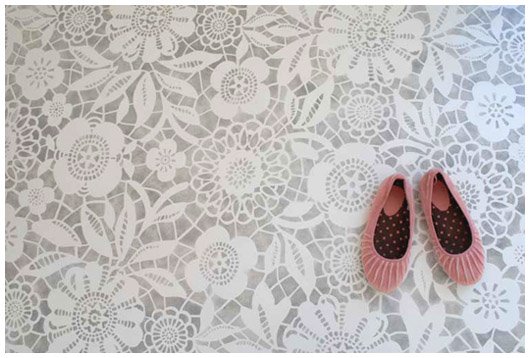
As designers, we are taught that beauty for beauty's sake is useless, and that purely decorative or ornamental artefacts are frivolous and valueless.
Oscar Wilde was one of the leaders of the late 19th Century aesthetic movement. Whilst touring the USA during the civil war, was asked why he thought America had descended into violence. His answer was simple: "because you have such ugly wallpaper".
The argument runs that human beings have done our best to despoil the greatest beauty available - nature. Compounding that is the fact that so many of us choose to live in 'ugliness' created by ourselves, so what must that do for our sense of self worth and how we value others? And finally, living in ugliness, and devaluing ourselves and those around can only, eventually lead to violence...
I like this line of thought particularly because it makes explicit the fact that we do value our surroundings, the things we own and use, and the relationships between all these things. We spend our lives building an identity - for the outside world, and for our internal world. And we do this through the stories we tell about ourselves, and also through the objects we collect around ourselves. Through an implicit and explicit selection process we build a visual version of ourselves that we trust to help tell our stories ...

I love to make things beautiful. I can't help it. I love twiddly, pointless detail. Irrelevant imagery that adds some intricacy, some added-interest, and some character to the banal and irrelevant materialism that we use to define ourselves.
I would not describe myself as a materialistic person, yet I surround myself with objects that I feel are beautiful and improve my mood and my perception of myself. My room is a mess of art books, antique cameras and wristwatches, and my walls are consistently adorned with an ever-changing rotation of beautiful imagery that strengthen my personal identity and help me communicate my traits, values and interests to others.
Why this compulsive fetishisation of material goods? Goods that are not even representative of wealth or allude to a successful or luxurious lifestyle?

My question is: can surrounding ourselves with beauty, and treating beauty as though it were an essential component of our relationship with our physical environment improve the quality of our relationships with our not only our habitats but ourselves and others?
Aesthetism: The artists and writers of the Aesthetic movement tended to hold that the Arts should provide refined sensuous pleasure, rather than convey moral or sentimental messages. As a consequence, they did not accept John Ruskin and Matthew Arnold's utilitarian conception of art as something moral or useful. Instead, they believed that Art did not have any didactic purpose; it need only be beautiful. (from Wikipedia)
Something to believe in

Britain was recently described by the Pope's aide Cardinal Walter Kasper as a "third-world country". An amusingly provocative statement, and a rather poor analogy for our country's famine of faith. He subsequently was dropped from the Pope's widely-publicised trip to the UK, 'for health-reasons'. Was he was referring to the fact that we are a secularly-governed society? I wonder if he would then consider India, arguably still considered 'third-world' (if we're using the outdated terminology) the same way?
What I find interesting is the way Cardinal Kasper phrased his poorly-considered aspersion on Britain. The way he so directly compared the value of faith to material wealth.
In the age and culture of unbelief that we find ourselves occupying, how else can we comprehensively descibe an intangiable thing's worth but to compare it with something monetary or material?
Last year, I read American Gods by Neil Gaiman. You've got to read it, it's flipping brilliant.

We follow the protagonist known only as 'Shadow', who has been released from prison to find that his wife has died in a car-accident. Whilst sucking his best friend's cock. Left with nothing, when he's offered a job by a mysterious dude known as Mr. Wednesday he takes it.
I can't be bothered to write a full plot summary, so SPOILER ALERT! Here is the jist of it:
Mr. Wednesday is Odin. And Odin is preparing for war. Old gods vs. new. The old gods are all that you could possibly imagine, from the Egyptian sun-god Ra to the Caribbean trickster Ananse. They have arrived and are sustained in the 'new land' by the fading trickles of belief that still comes from human minds. If someone- anyone- is still praying then the old gods exist, occupying both this world (where they live amongst us in disguise) and the dimension alongside it. Mythology overflowing into our familiar reality.
What makes American Gods truly fascinating however, is the New Gods. The god of television- with her perfect pin-stripe suit and dazzling smile, and Tech Boy- pale and covered in spots, but greedy and murderous. It goes on and on- from the god of Freeways to the Internet- set to become the New Gods' head-hancho.
It's his comparison of religious and corporate iconography that gets me. It's fucking genius. It's human recourse to turn to something beyond ourselves for comfort, distraction, purpose and meaning. It's just that nowadays we do it with Heat magazine instead.

Will Self says it pretty well in The Book of Dave. Set 500 years A.D. (After Dave). Dave is a schizophrenic cab driver in London whose wife buggers off with his child. We follow as he goes slowly mad, eventually creating his own religion based on the London cabbing 'Knowledge'. He has his religion engraved into a metal book and buries it at the end of his ex-wife's garden. Hundreds or thousands (we never know- but pigs have evloved) of years later, his book has been dug up and Davism adapted as the primary religion of the mostly submerged principality of 'Ing'. Everyone chats Mockney (the generic term for a hot meal is "curry" and for breakfast, "Starbucks") and Mummies and Daddies share custody of children, the 'Changeover' reflecting the ritualistic aspects of Dave Rudman's 21st century life.
A parody of modern religion and blind faith, Self "challenges the assumption of whether people should follow something just because it is written in an old book."
Personally, I am agnostic. Or a "fucking fence-sitter" if described by Professor Richard Dawkins.
Just a meandering little thought. Not really sure where this one is going.
Wells Blog
Duis mollis, est non commodo luctus, nisi erat porttitor ligula, eget lacinia odio sem nec elit. Maecenas faucibus mollis interdum. Nulla vitae elit libero, a pharetra augue.


Commodo cursus magna, vel scelerisque nisl consectetur et. Donec id elit non mi porta gravida at eget metus.