
Excalibur

It's a drizzly day in South East London, and I'm weaving my way through the mazes of Lewisham's council estates, which only seem to amplify the weather. The homogenous grey terraces and flat blocks are grey in both colour and nature. I'm on my way to Catford, and the Excalibur Estate.

In case you're unfamiliar with the Excalibur Estate- where the streets are named after Arthurian legend- it is the largest remaining post-war prefab community in Europe, and the only one left in London. Built in 1948 by German and Italian prisoners of war to rehouse those left homeless by the blitz, the prefabs were designed to last between 10-15 years, but after more than sixty, they're still standing- and so is the community that has grown up around them. Despite six years of tireless campaigning by local residents and English Heritage, the future of Excalibur is looking bleak. The council have approved plans to 'regenerate' the estate- the historical prefabs will be torn down, to make way for yet another block of flats.
 Jim and Lorraine Blackender formed the Worried Tenants Group in opposition to the proposed demolition of their community, and kindly invited me into their (beautiful) home. They have been living in their prefab on Excalibur for twenty years, but the last six years have been a whirlwind of bureaucracy, media hype and worry. The thing is, this is more than a bunch of prefab homes, more than an marker of working-class history, more than roof over their heads- this is a thriving community, and the most exceptional phenomenon of neighbourliness remaining in what is our frequently alienated city. There are generations of families living alongside each other. Some residents have been here since the estate was erected. It has such a low crime rate that the police no longer even bother to patrol here, and kids can play safely in the street- parents comforted by the fact that there will always be a pair of friendly eyes to watch over them.

The residents of Excalibur are bound together by the history of the estate, as well as the buildings themselves. The buildings are what make the community- and despite Lewisham councils assurances that it will keep the community together after demolition- Jim and Lorraine know that the reality will be just another council estate with all the distrust, alienation and crime that that brings with it.
"There are waiting lists of people who want to live in a prefab on the estate. In the council flats across the road the waiting list is to get out."

You can read all about the efforts being made to rescue the Excalibur estate at Jim's campaign website as well as in numerous national press articles from the past few years (just Google search).
My project to date has been about investigating communities. Why do we have such successful tight-knit communities out in the sticks (where I'm from) and yet in the cities any sense of human significance is lost? The Excalibur estate shows that communities can and do exist within the city limits, and they're as wonderful if not better than anything you'll find in the countryside.There are people who dedicate their lives to conserving, rescuing, and building communities every day, but their stories and their efforts are disappearing into the mists of time- just like our sense of neighbourliness.

History frames and contextualises our sense of place- our sense of each other. Maybe we're making the wrong kind of history memorable. What if what's available in the history books and museums isn't good enough? Fuck the hard facts of battle dates and grandiose architecture, this is what really matters. This is the kind of history that's relevant.
And if we don't know about it, if we are unaware that there is anything there to preserve, then who is going to do anything about it?

My mission is hence to tell the stories of the communities and individuals who are struggling tirelessly against the individualism and distrust that thrives. They are still here, they do deserve our attention. I'm going to help them get it.
Future Nostalgia?
I've found a DIAMOND book in the library, The Countryside Ideal by Michael Bunce. It's basically about the idealisation of rural life in Anglo-American culture. ie: why we idealise the countryside, how we idealise it and the projections and assumptions that we make about life there. It discusses how attitudes toward the countryside are as a result of urbanism and industrialisation. If the population of Britain's countryside continues to grow at such an alarming rate (3x the rate of urban environments) and if we continue to aspire to a 'simple, quiet' life in the country, it's not going to be too long until what remains of the rural idyll captured in the national mind's eye is nothing but a story. A myth left over to tell the grandchildren about. It's already happening.
I watched this the other day. It featured a village whose history spanned a thousand years, and in the 1930s featured in a movie showcasing it as a rural utopia- the perfect escape for the middle classes. Years on, the programme takes a look at the same village, talking to a farmer whose old cow-shed is now a £700,000 barn conversion and a city-worker whose two-hour commute home at night crosses paths with a local builder who can trace his family back through the village six generations as he returns to town- no longer able to afford to live the picturesque ideal that is his heritage.

I know I've already rambled about the genius of Will Self's The Book of Dave a few times, but I dragged it out yet again to have a look through the maps in the front. Visions of London underwater at an indeterminable point in the future. It's full of social and cultural references to the present day. Misremembered and misinterpreted scraps of information and tradition that live on in a broken, fragmented kind of way amidst the new, future culture of Ing (England).
Why do we reflect on lost times and ways of life and elevate them as ideals? Why will yesterday always seem better than today? Countless historical sites stage historic reenactments. Kentwell Hall in Suffolk is the first that springs to mind. During the summer months, they employ around 70 full-time Tudors who work the land and run the house as they did in the 1500s. Tales of a lost time, when things were simple, folks worked hard and were happy, and wore silly costumes and spoke silly words.
I remember visiting Kentwell Hall on a school trip when I was really small. Completely overwhelmed with the place, my childhood imagination reveled in the idea that I had actually been transported back in time; that these people were actual Tudors. It was wonderful... until I spotted the strip lighting on the ceiling inside one of the cattle sheds. The boards covering it over had not been replaced properly, and the illusion of my escape into another time was shattered.
In as little as thirty years time, it's likely what remains of the culture and traditions of the Countryside will have been warped beyond all recognition. After all, its the people that these qualities live through- not a tangible landscape or object. So, in our future attempts to uncover the lost vision of Britain's countryside what assumptions will we make about it? Will the children of 2050 sit through an granny-style afternoon tea or a Harvest Festival with the same detatched sense of awe that I felt about the ladies churning the butter in Kentwell gardens? Will it be the same? And what form will our idealised communities now take? We're already stumbling into a future where idealised rural-living is artificial, misplaced and misinterpreted (like this), so what will they look like by then?
God of all things good, Russell Davies had a great idea with his Lyddle End project, where he took the charming railway models of fictional picturesque Lyddle End village and asked artists and designers to remodel them as they'll look in 2050. I love this idea that the chinese-whisper effect of history will contort the recognised into something alien. Also, read this. Oh, isn't he so very clever?

So, more stuff to look into. I want to find out more about these funny folks who dress up and relive history in a variety of weird and wonderful ways, and just why they do it. The escapist element is obvious, as is the nostalgic one. But I'm mostly interested in the inaccuracies of what they do. The fuck-ups and faux-pas of the reenactments. Is it the accuracy that matters to them? Or just the illusion that they have- just for a short time- the undesirables of living life today.
If anyone reads this (in my optomism that anyone makes it this far through my rambling) and has any suggestions for reenactment events or venues, or better- knows anyone who likes to get dressed up and have sword-fights I'd love to hear from them. The closest I've come to experiencing this was my 18-month flirt with WOW. And I don't think that quite counts...
The Legend of Black Shuck
Over the past day or two I've been thinking about mythology and folklore. Somehow as yet they are themes that have managed to be left out of this project. This is about to end.

With a bit of a prompt from Onkar, I've been researching the systems through which myths and folklore of 'oldentimes' (lovely expression) manifest themselves in present day. The Loch Ness monster is an obvious example. The Loch Ness lake has built up an enormous tourist economy based predominantly around the legend of the monster (though I'm certain local residents and business-people are sick of it).
It didn't take long to dredge up some pretty rancid tourist crap on the subject. Loch Ness now features a 'nessie' tour and Loch Ness Monster exhibition centre, all dedicated to the history of the mythic beast and the countless fruitless searches for him.


And so, Nessie- imagined or not- lives on in the consciousness of the American tourists who go on his tours and buy his mundane merchandise, the forlorn creature-seekers who sought [the money and accreditation in discovering] him, and the weary tradespeople who capitalise upon him. Is this all the capacity we have for myth and legend in a cynical age?
I thought it might be interesting to look into something a little bit closer to home. The legend of Black Shuck. The stuff of East Anglian legend.

The Black Shuck is a great Black Dog with saucer-like, flaming malevolent eyes who roams the coasts and lonely tracks of Norfolk and Suffolk. He made his first recorded appearance was at 9am on August 4 1577 in St. Mary's Church, Bungay. Abraham Fleming's description in his book A Straunge and Terrible Wunder is amazing:
"This black dog, or the divel in such a linenesse (God hee knoweth al who worketh all,) running all along down the body of the church with great swiftnesse, and incredible haste, among the people, in a visible fourm and shape, passed between two persons, as they were kneeling uppon their knees, and occupied in prayer as it seemed, wrung the necks of them bothe at one instant clene backward, in somuch that even at a mome[n]t where they kneeled, they stra[n]gely dyed."
As the tale goes, the church tower collapsed in on itself and the beastie then ran up the pulpit, disappearing in fire and lightning and leaving scorched claw-marks on the Northern Doors which can still be seen at the church today.
The tale has become ingrained in Norfolk/Suffolk culture, but not only that- the Black Shuck has appeared in many other works of fiction and fantasy since. Most memorably, Arthur Conan Doyle's Hound of the Baskervilles, which he wrote while staying at Cromer Hall, the sight of one of the more famous subsequent sightings of the dog. He's also popped up in a few comics (Hector Plasm, 2000ad's London Falling, Supernatural: Origins), fantasy books (Northern Lights, The Age of Misrule, Harry Potter), a musical play (The Storm Hound by Betty Roe and Marian Lines), and had songs written about him (Nick Drake's Black-Eyed Dog, The Darkness' Black Shuck). Apparently he's even a boss in both MMORPG Lusternia and Final Fantasy XI!
It made me think of this appalling set of images found in the kiddies' section of Nessieland.com:


It's interesting that we treat these stories like public property- no copyright law applies here. We have the right to take the characters and brazenly plonk them into any scenario, medium or context we like. It's almost as if Nessie- as well as Black Shuck- exist on a plain of National consciousness, inhabiting the public imagination. After all, isn't that how the myths and legends bred in the first place?
There have been no less than a further 153 supposed encounters with the legendary Black Shuck since it first appeared in Bungay in the 16th century. And there is a man who has collected and documented every single one of them. I mapped them. Why not?

Mike Burgess is the man, and wow- what a man. Not only has he recorded, edited, interviewed and categorised his way through every single one of these 153 tales, he has written about the misconceived similarities between Shuck and other beasties (such as the ghosts of people's pets, the Moddey Dhoo and the Snarleyow), and origins of the legend being from the Vikings (their's is different). As well as this he has collected and analysed data of all the recorded encounters and legends and written a five-part essay entitled (gloriously): Analysing the Hell out of the Beast.
This actually helped to distract me from my original Shuck fact-finding mission. Just who are these people? These myth-seekers and fantasy-detectives who are so fascinated and become so obsessed with myths and folklore. Another method of escaping a hard and cynical world- harking back to the days of ghosts and monsters. It's made me want to watch Mythbusters, actually. After all... what's not interesting about this man?
.... just some stuff to think about.
Uh-oh: tangent
Uh oh...
I'm having what you might call a 'hiccup'. It's been an odd week. I crashed my car which wrote Tuesday off (amongst other things), and Wednesday I gave my Territories presentation. Possibly the worst presentation of my life I might add- I hadn't practiced and the allotted five minutes ran into fifteen. Shit. Now I have a cold. And all I seem capable of doing is sitting in bed thinking myself into holes.
This is going to be another one of those trail-of-thought honesty rants. Advance apologies.
The feedback from my (dire) presentation made me realise a few things: a) Urban chintz and decoration has been done to death. And better than I could ever do it, by him, him and these guys. b) Villages already exist in London (well, I already knew this but have been resisting it) so what point am I trying to make by blending these aesthetics? c) I'm looking too big, I need to design for something/someone specific. d) I need to establish a user.
and aside from all of this,
I STILL CAN'T GET FLIPPING MAPS OUT OF MY HEAD.
What is it exactly I'm trying to achieve here? What am I originally interested in about villages?
- Engagement with your environment and how it shapes your identity, and the ties we form with the physical landscape.
- British identity and nostalgia- why is it so wrapped up in the image of the countryside?
- Collective memory- stories and events exclusive to a community that help make it unique.
The other day I found this:

It's a map of Deptford and New Cross from 1840. As it turns out, most of it was still fields back then. A village overspill of London, if you like. It made me realise- on a deeper level- the history and human-ness that is all around and yet completely invisible to me. I realised also, that any sense of belonging to a place comes from familiarity, and the memories that bind themselves to the physicality of the world around you.
I have already discovered that happiness and contentment within your environment comes from familiarity, and the nostalgia of lost memories. I conducted a small survey (and by small, I mean 20 people or so) a couple of weeks ago, and the results showed that a person will almost always remember being happier in the place they grew up- the place where all the relationships are already formed. Reminiscent nostalgia.
Some other research I've found particularly interesting is the overwhelming tendency for the elderly to retire to the countryside. The inherent nostalgia of the place beckons even those that have never set foot outside a city before. And according to the reading I've been doing on various retirement forums, a lot of the time the new environment- away from familiar sights and relationships, friends and families- can result in some unhappy twilight years.
So. With all this in mind, I've been thinking there could be a lot of potential in talking to London's elderly population. Why are so many inclined to leave? What are the perks or problems of being retired in the city? What has changed? All of these could open fantastic potential avenues for design, but essentially, I just want to hear their stories. If community life is entangled in memory, then can't I somehow borrow somebody else's? What if I could make these stories and memories tangible?
So then I started thinking- how can you make a memory physical?

Here is a map of my childhood memories. Not the memories themselves per cé, but the locations I find them enveloped in. It in no way represents geographical accuracy, but it means familiarity: locations functioning as thought-anchors for my reminiscences. I find this concept of psycho-geography fascinating.
What if I could make maps of nostalgia. Telling tales about London from the people who've grown old here. Could this somehow work to transfer reminiscent affection from its origin to a new user, to help nurture a sense of familiarity, and thus community and contentment?
My head hurts. And this is a big tangent. Is this wrong? I don't know... but I'm still retaining my core themes: Environment and familiarity, nostalgia and romance. It's just not quite Villages any more is it?
Consolidating rant...
What follows is the first draft copy+paste of what I had intended to be a simple outline of my project. What it actually is is a load of meandering thought-trails, lists, non-sensical grammar and some probably quite rubbish ideas. But who cares? This is where I'm at right now:

------------------------------------
So I've been a bit stuck this week.
I've managed to produce a few bits and pieces, but the 'flow' has all but left me. I'm sure that this is more a reflection on me than on my subject matter.
Last night I sat down and tried to form some cohesion of my interests and themes that have manifested themselves in my little endeavours so far. I don't think that I'm analysing my motives hard enough.
The most important themes present in my work so far have been:
- -Nostalgia
- -Village Environment Aesthetics
- -Symbolism
- -Naivity/ Childishness
and my key points of research have been:
- -Projection and manifestation of Stereotypes (miniature villages etc)
- -Model and utopian Villages (Thorpeness)
- -Happiness and environment
- -Community identity
- -Personal Geographies and escapism
------------------------------------
My most recent and more specific statistical findings include:
- -People who have lived in the same place for more than 5 years are more likely to be happier. Thus, familiarity = happiness. (not just because you live in a village) (Source: The Happiness Formula, BBC 2008)
GFKNOP.com Consumer Trends: Nostalgia Report:
Recession provoking nostalgia: 62% consumers experienced a negative monetary experience in past year, 23% positive one. When things are crap in the now, we escape by looking forward to when times will be better, or by looking back to when times were better. Because nobody knows what the future holds, it is easier to look back. Evidence:
- Resurgence of nostalgic brands: Arctic Rolls, Wispa bars (hurrah!), Birds Custard
- Revival of bands and musical styles: Take That, 80s Synth: The Killers La Roux
- Movies and TV: Dr Who, Life on Mars, A-Team etc.
- 'Retro Styling, Modern Function': Beatle, Mini, Fiat
- Emphasis on heritage (trustworthiness): Persil "Tough but gentle for 100 years"; Hovis "As good today as it's ever been"; M&S "125 years since the penny bazaar"
*NOSTALGIA 2.0: Like the first time, but better!
(Reviving nostalgic images of Britain and evolving them for the modern one)
'Rusource', Commission for Rural Communities
- -The rural population of Britain is growing at a much faster rate than the urban due to in-migration. Perticularly in ages 0-9, 30-44 and 60+ age ranges. People still want to raise their kids and retire in the country.
- -The 15-29 age ranges are leaving rurality for urban environments at a much faster rate too, mostly through higher education.
- -The average age of the rural citizen is 5 years older than that of the city.
- -Current government development schemes discourage development in rural areas with emphasis on urban and town fringe areas.
State of the Countryside Summary Report 2010
- -23.5% of people in rural areas are over state retirement age, compared with 18.1% in the city. The South-West and East-Anglia have the highest 60+ populations in the country, at 121,900 and 92,600 respectively.
- -You are more likely to have a greater sense of well-being in your environment if you live in a rural community. 87% in rural compared with 76% in urban.
- -It is significantly more costly to live in a rural environment than in an urban one.
- -Greenhouse gas emissions are higher in rural areas for all sectors. Significantly more by transport because of greater distances travelled.
------------------------------------

This presents me with a few obvious points and dilemmas to focus on:
The population in rural areas is growing due to pensioners and families inmigrating from cities.
- -small, familiar communities are saturated with strangers, diluting community bonds and trust.
- -There aren't enough public services or housing to support this influx
- -Growth of non-independent and corporate commercial development in response to demand for more efficient amenities. Undermining independent business.
- -Age segregation: the older in villages, the younger in cities. Loss of integrated communities.
So basically, the problem is this: people would rather grow old or raise a family in the countryside, and this is messing quite a few things up. What i need to determine is:
- -WHY people want to in-migrate to rural areas.
- -WHAT are the benefits and qualities of the village environment.
- -HOW these perceived qualities are manifest; how they are visualised, enacted and reinforced.
I need to look at the perception of the chocolate-box Britain and its advantages, then somehow project this onto urban environments in order to tempt people to raise families and grow old there:
- -Prevent over-development in rural areas
- -Attract rural levels of contentment to urban areas
- -Promote a more evenly balanced mean age of population in both.
Trials and Tribulations of a Foodie with a Handicap...

 I love food. Food food food food food. There is one difficulty: I can't eat any of it. I am lactose intolerant and have an insulin resistance, which means that I can't gain the nutritional benefit of any foods that cause my blood sugar to spike- foods that have a high Glicemic Index. This includes...
- Almost all carbohydrates: breads, potatoes, wheat products, rice, dried pasta, crackers and cereals. This includes gluten-free options. No joy.
- Sugars: including [obviously] sweets, cake, chocolates, and limiting my intake of some natural sugars like honey, dried fruit and juices.
- Saturated fats: Anything deep-fried or fried in excessive oils, and limiting intake of really fatty cuts of meat like patés, duck and goose, lamb and steak, or reconstituted meat products that contain rusk or breads like burgers and sausages.
- Dairy products: I haven't eaten dairy since I was 15, and I'm trying to work it back into my diet. Progress includes low-fat yoghurt, cottage cheese, low fat Philadelphia or a dash of semi-skim in my tea.
Easily the most difficult thing is eating out, or at friends houses. Although eating intolerances are becoming increasingly  understood and catered for, you try asking for your meal to come dairy and carbohydrate-free with a low fat content. People look at you like you're totally nuts. Or have an eating disorder. It's just embarassing.
Worse than that is that the information you can find on a foods' glycaemic index is patchy at best, and extremely variable. Sometimes I read that spaghetti is perfectly ok, other times that only fresh egg-pasta is acceptably slow-burning. Pules and Legumés like beans are great, but commercially tinned baked beans aren't cool because of the sugar content of the sauce. A mash potato has a higher GI than a boiled one. Go figure.

Labelling is also a problem. Tesco [as far as I'm aware] are the only vendor that give an indication of the Glycaemic values of their foods. Others, like Sainsburys operate on the nutrition wheel system which although useful isn't that helpful when applied to the low GI diet.
But some good has come from having to monitor my diet so strictly. I am absolutely astounded at the amount of crap we perpetually put into our bodies. Most British households will consume wheat products 2-3 times a day, red-meats 4-5 times a week, and our daily calorie consumption has rocketed from an average 2000-2500 calories to a whopping 3000-3500 per day, exceeding our recommended intake by 1000. (Source: Food Standards Agency National Diet and Nutrition Survey 2008-2009)
My Dad recently had some pretty hardcore Gallstones, and needed to completely cut out fat from his diet in the lead-up to his operation. He's an educated man of 55, but had absolutely NO CLUE what was in the food he ate. Who knew there was that much fat in a something as healthy-seeming as a bowl of meusli, or a spaghetti carbonara? Dad has a pretty healthy diet anyway, but the fact he just had no concept of the amount of fat in his food and how much or it he was consuming was shocking to me. But then, I am a nutrition geek.
 But that's the thing: people just don't know what's in their food, and they don't think about it either. And it's started to really piss me off. Living in South London, we have A LOT of takeaways. And I for one am absolutely sick of seeing school-kids in their uniforms strolling down the road at 3pm munching chicken and chips. Recently, a bus-stop on Old Kent Road was displaying an advert for Coco Pops that scared the crap out of me: how can we let them get away with it? WHY aren't we EDUCATING people about their food? Why are such poor standards of commercially distributed foodstuffs allowed? Jamie Oliver- I am with you on this one.

I think about food all the time, and I notice food in the world around me constantly. Now that I'm living with the culinarily-extraordinary Ms. Dipa Patel, I only expect the obsession to grow.
Empathic Nostalgia of the 1970s Wristwatch
Two wonderful friends of mine bought me this little beauty for my birthday last August. Bling bling BLING. I wasn't even born when these were released, so why do I feel like I should be wearing a school dress and throwing paper aeroplanes around when I'm wearing it? Aah, the wonderful sensation of Consumer Fetishism. Cool as hell.


Here are some other extremely fandangulous examples of retro time-pieces...


L-R: Old Stock Lanco Direct Time: the Swiss answer to the LED in the mid Seventies (£150); Classic Camif Early 60's Dress Watch (£85)


L-R: Old Stock Gruen LED (£250); 1980's Chromachron Quartz Watch (£235)


L-R: Baschmakofff Direct Time Automatic 1974 (£550); Amida Digitrend Direct Time Steel Watch (£750)
....and the Mac Daddy:

A new, hand made "Nixie Tube" clock.
These were the "digital" display tubes that you used to see when watching the Apollo missions in the 60's. In fact some of these tubes were originally NASA ones! Inside a glass tube, ten filaments are shaped to form the digits 0 - 9 which when lit give off a warm orange / violet glow that can be read from quite a distance...
All images and price references courtesy 70s-watches.com. This guy has way, WAY too many watches. It makes me extremely happy.
The Catastrophic Effect of Ugly Wallpaper
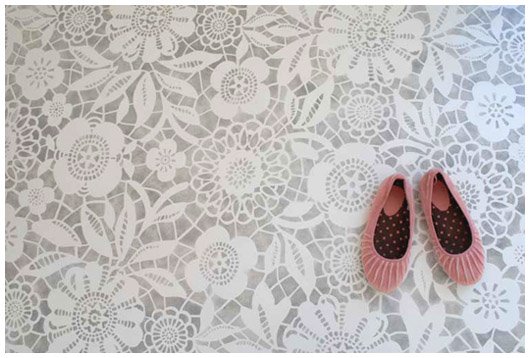
As designers, we are taught that beauty for beauty's sake is useless, and that purely decorative or ornamental artefacts are frivolous and valueless.
Oscar Wilde was one of the leaders of the late 19th Century aesthetic movement. Whilst touring the USA during the civil war, was asked why he thought America had descended into violence. His answer was simple: "because you have such ugly wallpaper".
The argument runs that human beings have done our best to despoil the greatest beauty available - nature. Compounding that is the fact that so many of us choose to live in 'ugliness' created by ourselves, so what must that do for our sense of self worth and how we value others? And finally, living in ugliness, and devaluing ourselves and those around can only, eventually lead to violence...
I like this line of thought particularly because it makes explicit the fact that we do value our surroundings, the things we own and use, and the relationships between all these things. We spend our lives building an identity - for the outside world, and for our internal world. And we do this through the stories we tell about ourselves, and also through the objects we collect around ourselves. Through an implicit and explicit selection process we build a visual version of ourselves that we trust to help tell our stories ...

I love to make things beautiful. I can't help it. I love twiddly, pointless detail. Irrelevant imagery that adds some intricacy, some added-interest, and some character to the banal and irrelevant materialism that we use to define ourselves.
I would not describe myself as a materialistic person, yet I surround myself with objects that I feel are beautiful and improve my mood and my perception of myself. My room is a mess of art books, antique cameras and wristwatches, and my walls are consistently adorned with an ever-changing rotation of beautiful imagery that strengthen my personal identity and help me communicate my traits, values and interests to others.
Why this compulsive fetishisation of material goods? Goods that are not even representative of wealth or allude to a successful or luxurious lifestyle?

My question is: can surrounding ourselves with beauty, and treating beauty as though it were an essential component of our relationship with our physical environment improve the quality of our relationships with our not only our habitats but ourselves and others?
Aesthetism: The artists and writers of the Aesthetic movement tended to hold that the Arts should provide refined sensuous pleasure, rather than convey moral or sentimental messages. As a consequence, they did not accept John Ruskin and Matthew Arnold's utilitarian conception of art as something moral or useful. Instead, they believed that Art did not have any didactic purpose; it need only be beautiful. (from Wikipedia)
Something to believe in

Britain was recently described by the Pope's aide Cardinal Walter Kasper as a "third-world country". An amusingly provocative statement, and a rather poor analogy for our country's famine of faith. He subsequently was dropped from the Pope's widely-publicised trip to the UK, 'for health-reasons'. Was he was referring to the fact that we are a secularly-governed society? I wonder if he would then consider India, arguably still considered 'third-world' (if we're using the outdated terminology) the same way?
What I find interesting is the way Cardinal Kasper phrased his poorly-considered aspersion on Britain. The way he so directly compared the value of faith to material wealth.
In the age and culture of unbelief that we find ourselves occupying, how else can we comprehensively descibe an intangiable thing's worth but to compare it with something monetary or material?
Last year, I read American Gods by Neil Gaiman. You've got to read it, it's flipping brilliant.

We follow the protagonist known only as 'Shadow', who has been released from prison to find that his wife has died in a car-accident. Whilst sucking his best friend's cock. Left with nothing, when he's offered a job by a mysterious dude known as Mr. Wednesday he takes it.
I can't be bothered to write a full plot summary, so SPOILER ALERT! Here is the jist of it:
Mr. Wednesday is Odin. And Odin is preparing for war. Old gods vs. new. The old gods are all that you could possibly imagine, from the Egyptian sun-god Ra to the Caribbean trickster Ananse. They have arrived and are sustained in the 'new land' by the fading trickles of belief that still comes from human minds. If someone- anyone- is still praying then the old gods exist, occupying both this world (where they live amongst us in disguise) and the dimension alongside it. Mythology overflowing into our familiar reality.
What makes American Gods truly fascinating however, is the New Gods. The god of television- with her perfect pin-stripe suit and dazzling smile, and Tech Boy- pale and covered in spots, but greedy and murderous. It goes on and on- from the god of Freeways to the Internet- set to become the New Gods' head-hancho.
It's his comparison of religious and corporate iconography that gets me. It's fucking genius. It's human recourse to turn to something beyond ourselves for comfort, distraction, purpose and meaning. It's just that nowadays we do it with Heat magazine instead.

Will Self says it pretty well in The Book of Dave. Set 500 years A.D. (After Dave). Dave is a schizophrenic cab driver in London whose wife buggers off with his child. We follow as he goes slowly mad, eventually creating his own religion based on the London cabbing 'Knowledge'. He has his religion engraved into a metal book and buries it at the end of his ex-wife's garden. Hundreds or thousands (we never know- but pigs have evloved) of years later, his book has been dug up and Davism adapted as the primary religion of the mostly submerged principality of 'Ing'. Everyone chats Mockney (the generic term for a hot meal is "curry" and for breakfast, "Starbucks") and Mummies and Daddies share custody of children, the 'Changeover' reflecting the ritualistic aspects of Dave Rudman's 21st century life.
A parody of modern religion and blind faith, Self "challenges the assumption of whether people should follow something just because it is written in an old book."
Personally, I am agnostic. Or a "fucking fence-sitter" if described by Professor Richard Dawkins.
Just a meandering little thought. Not really sure where this one is going.
Wells Blog
Duis mollis, est non commodo luctus, nisi erat porttitor ligula, eget lacinia odio sem nec elit. Maecenas faucibus mollis interdum. Nulla vitae elit libero, a pharetra augue.


Commodo cursus magna, vel scelerisque nisl consectetur et. Donec id elit non mi porta gravida at eget metus.