
Rushey Green Map Unveiling
Today was the unveiling of the Rushey Green community heritage map in Catford, South London. This project has been 6 months in the making, and seeing it finally in print was bloomin satisfying. Also, received first-ever bunch of flowers from the Mayor of Catford. So yeah, that was a double bonus.
This project couldn't really have been better suited to me- map drawing, community and historical geekery all rolled into one. It's an exercise in creating history visible in a way which is designed to reinforce a sense of local pride and identity.

The fine people at the Rushey Green Residents' Committee were the ones handing over the completed content this time around, but in future I think I might initiate the research myself. Gotta love archive snooping and interviewing history buffs.
Back on the blog-horse.
It's been a long two weeks, and despite my blog neglection it has been pretty busy too. It's been particularly interesting on the contextual front, and a wealth of new and very clever stuff has implanted itself in my brain courtesy of people like Benedict Anderson and Arjun Appadurai. On top of this, some very clever and inspiring artists like Karen Guthrie and Nina Pope, Tom Hunter and James McKinnon, as well as Goldsmiths' very own Pete Rodgers have given me more than my fair portion's food for thought. But, if I go on like this the word count of this blog post will be longer than my dissertation.
So what follows is a very brief summary of how my project has changed and evolved over the last two weeks or so. I really hope it makes sense...
Last week I wrote a bit about Urban myth and legend, having been interested in Nessie and the Black Shuck of Norfolk/Suffolk. I came to wondering about how a character comes to exist on a level of communal consciousness, and how a locality's desire to make tangible some recognition of its existance- within their minds- results in a system of half-belief: we know it's not real yet we like to treat it as though it could be. In other words, we'd like to remember it that way. In Bungay, the local running club is named after a hell-hound.
"The long-term reproduction of a neighbourhood that is simultaneously practiced, valued and taken-for-granted depends on the seamless interaction of localised spaces and times with local subjects possessed of the knowledge to reproduce locality." (Appadurai, 1996)
From here, I've become extremely interested in collective memory, knowledge and remembering. I've already discovered a lot of evidence that suggests that familiarity within our environments (knowing the history, people, stories and physical spaces) precipitates contentedness and community. It is almost certainly this that makes the tight-knit rural communities of England seem so ideal. They visualise and mark their history, they tell stories and talk about local heroes and gossip. Adapting Marx: "local knowledge is not only in itself, but of itself."
So I've been investigating communal knowledge, memory (Benedict Anderson has some wonderful things to say on the subject of Imagined Communities) and nostalgia. Why and how we preserve and value the past, and ways in which we live our history alongside our present.

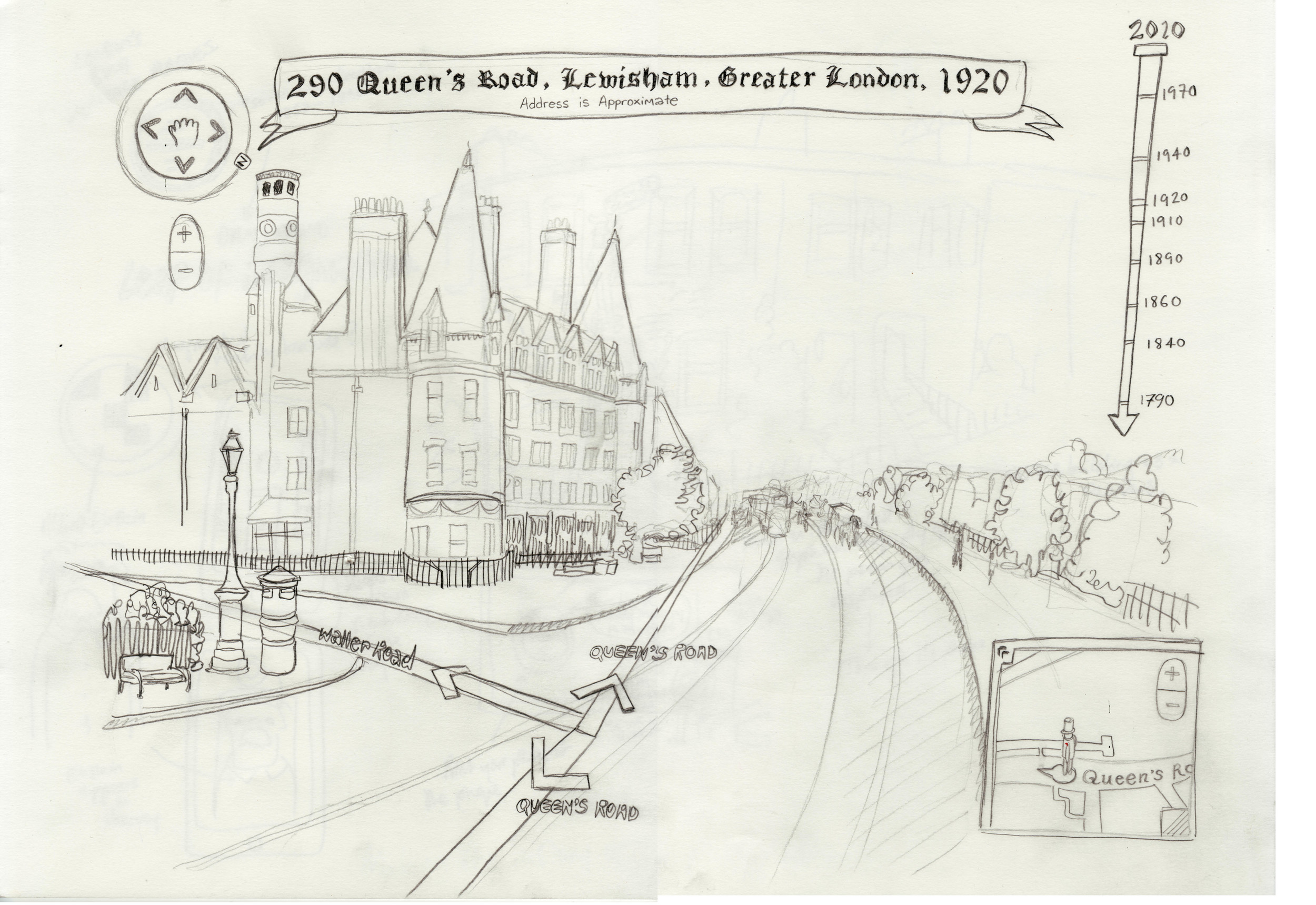
Aaghh, if I hadn't left this post so long I would detail my visits to Dennis Sevvers' house and Museum of London as well as my interview with a Medieval reenactor, but it will take forever...
Thinking about ways in which we memorialise things, I read a lovely quote by the lovely Stephen Fry: "We all pay lip service to the idea that yesterday makes today, but it is difficult to make the imaginative leap that truly connects us to our past... Blue Plaques, in their simple way, address this defect... for me, they are a unique imaginative portal into the past, for in my mind all Blue Plaques are contemporaneous, which is to say, the people commemorated by them are in their buildings now."
I love the blue plaque scheme too, but equally am always left faintly under-satisfied whenever I don't know who someone is, or their situation while they lived there. What if we could make their history more real, more visible?


After my visit to the Museum of London, seeing their London's Voices projects and also discovering the work of somewhere.org and Tom Hunter and James McKinnon's The Ghetto, I've become more interested in the idea of subjective histories or stories becoming part of a general community memory or consciousness. In Robbie (the medieval reenactor)'s words: The battle takes shape through a "multiplicity of subjective curators". And in the same way, a picture of a history (accurate or not) is painted on a woven tapestry of personal reminiscence. I LOVE this.

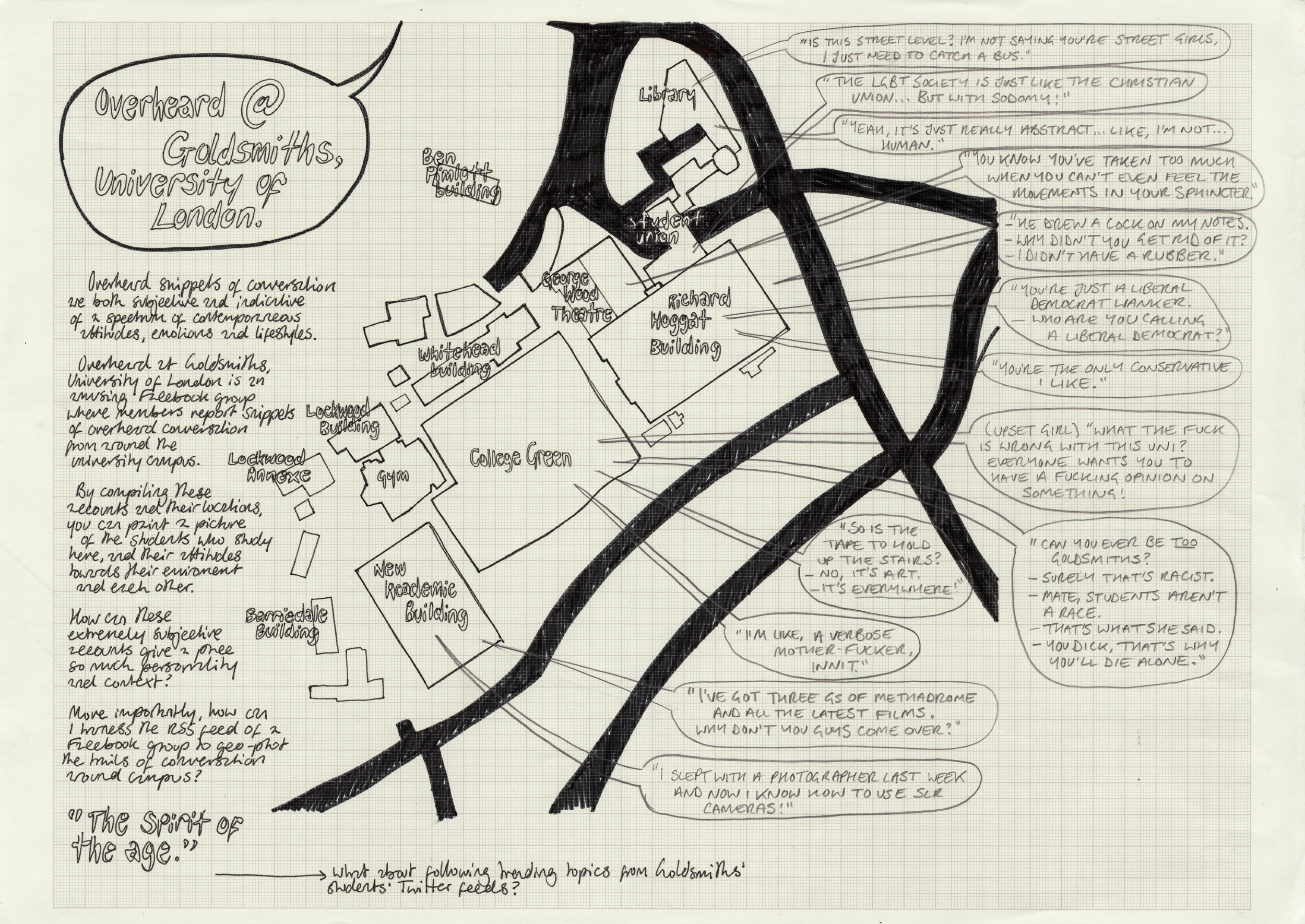
All of these thoughts and ideas are very much in their emryonic stages at this point, but I'm feeling pretty good about this.
My mantra has become 'Stories are inclusive'. Now I just need to find some stories!
Uh-oh: tangent
Uh oh...
I'm having what you might call a 'hiccup'. It's been an odd week. I crashed my car which wrote Tuesday off (amongst other things), and Wednesday I gave my Territories presentation. Possibly the worst presentation of my life I might add- I hadn't practiced and the allotted five minutes ran into fifteen. Shit. Now I have a cold. And all I seem capable of doing is sitting in bed thinking myself into holes.
This is going to be another one of those trail-of-thought honesty rants. Advance apologies.
The feedback from my (dire) presentation made me realise a few things: a) Urban chintz and decoration has been done to death. And better than I could ever do it, by him, him and these guys. b) Villages already exist in London (well, I already knew this but have been resisting it) so what point am I trying to make by blending these aesthetics? c) I'm looking too big, I need to design for something/someone specific. d) I need to establish a user.
and aside from all of this,
I STILL CAN'T GET FLIPPING MAPS OUT OF MY HEAD.
What is it exactly I'm trying to achieve here? What am I originally interested in about villages?
- Engagement with your environment and how it shapes your identity, and the ties we form with the physical landscape.
- British identity and nostalgia- why is it so wrapped up in the image of the countryside?
- Collective memory- stories and events exclusive to a community that help make it unique.
The other day I found this:

It's a map of Deptford and New Cross from 1840. As it turns out, most of it was still fields back then. A village overspill of London, if you like. It made me realise- on a deeper level- the history and human-ness that is all around and yet completely invisible to me. I realised also, that any sense of belonging to a place comes from familiarity, and the memories that bind themselves to the physicality of the world around you.
I have already discovered that happiness and contentment within your environment comes from familiarity, and the nostalgia of lost memories. I conducted a small survey (and by small, I mean 20 people or so) a couple of weeks ago, and the results showed that a person will almost always remember being happier in the place they grew up- the place where all the relationships are already formed. Reminiscent nostalgia.
Some other research I've found particularly interesting is the overwhelming tendency for the elderly to retire to the countryside. The inherent nostalgia of the place beckons even those that have never set foot outside a city before. And according to the reading I've been doing on various retirement forums, a lot of the time the new environment- away from familiar sights and relationships, friends and families- can result in some unhappy twilight years.
So. With all this in mind, I've been thinking there could be a lot of potential in talking to London's elderly population. Why are so many inclined to leave? What are the perks or problems of being retired in the city? What has changed? All of these could open fantastic potential avenues for design, but essentially, I just want to hear their stories. If community life is entangled in memory, then can't I somehow borrow somebody else's? What if I could make these stories and memories tangible?
So then I started thinking- how can you make a memory physical?

Here is a map of my childhood memories. Not the memories themselves per cé, but the locations I find them enveloped in. It in no way represents geographical accuracy, but it means familiarity: locations functioning as thought-anchors for my reminiscences. I find this concept of psycho-geography fascinating.
What if I could make maps of nostalgia. Telling tales about London from the people who've grown old here. Could this somehow work to transfer reminiscent affection from its origin to a new user, to help nurture a sense of familiarity, and thus community and contentment?
My head hurts. And this is a big tangent. Is this wrong? I don't know... but I'm still retaining my core themes: Environment and familiarity, nostalgia and romance. It's just not quite Villages any more is it?
Trip to Thorpeness- the Peter Pan village
I am seriously pissed off as I just spent a bloody hour writing, editing and formatting this pissing post only for it to disappear. NOT IMPRESSED WORDPRESS.[gallery columns="4"] As such, I really can't be bothered to re-type it all.
I wanted to get as much research done as possible while I was actually out in the countryside. So, on Wednesday me and my parents went on a jolly day outing to Thorpeness, the bizarre Victorian private fantasy holiday village. The only one of its kind in England.
It was bloody fascinating to go there- a kind of stage-set of a place. Weird ornamental architecture and more Peter-Pan references than you could shake a stick at.
But has it helped me further or expand my project..?
I'm a bit lost now to be honest.
(I'll post more about Thorpeness' history when I'm not so cross)
Villages of Vision (and chocolate-box fraud)

Ok, so it's been a wee while since my last blogging enterprise. It seems I have fallen off the 'blog-horse'. Well, happily that doesn't mean I've not been doing anything...
Thanks to Gillian Darley that is. Villages of Vision has become the backbone of my research thus far. She talks about 'Picturesque' and 'Model' villages like I've never heard them described before.
During the early 19th Century, the wealthy middle-classes were becoming disenchanted with London's industrial cities. There was a rise in popularity of 'rural pursuits' such as hunting, rambling and making pretty watercolour paintings of the landscape (Gainsborough and the Dutch masters were to thank for this).
The leisure classes had decided to escape to the countryside, and the only way to do it was to become the smug owner of your own sprawling country estate, along with all the pomp and circumstance that this brought with it.

The countryside and the agricultural industries had been in a state of steady and inevitable decline for centuries. Many rural communities were poor, humble places where people struggled to farm a living- many of the houses in a state of collapse. Of course, for the new lords and ladies of the manors, it wasn't terribly pleasing to have a rag-tag settlement at the foot of one's grounds. The land-owners first began to 'prettify' these dilapidated buildings, and then eventually, to accompany their land with a brand-spanking new community: the chocolate-box English village.

And so the idea of the 'Picturesque' village was born. An image of rural utopia that still holds good to this day. To the city-dwellers, these villages represented an ideal, and land-owners had dreams of their own self-sufficient, semi-utopian communities that would showcase their wealth, taste and- incidentally- philanthropic enterprise.
Some key points of interest:
“The truly rural village retains an aura of attainable community, still representing a combination of rural escapism and human significance... an oasis into which the city people crawl thereby contributing to its disintegration.”
There were many series of 'pattern books' that offered guidelines and specifications for how to fulfil the picturesque cottage aesthetic. The detail in these guides was minute, from chimney designs right down to the types of creepers. The fashions detailed in these books became ever more outlandish, extravagant and eventually ludicrous; a mish-mash of architectural details adopted from a million different eras and countries.
The adoption of architectural styles of extreme irrelevancy is an escapist tendency. Good examples are Jacobean Railway stations and Mock gothic buildings of the Victorian era. All are evasions of reality, conformity and rationality which express the same reasons for the creation of fake villages and the recreation of rural life out of context.
The importance of these villages lies in the symbolism and associative qualities implied; the sense of community aligned closely with the settlement's aesthetics. "Picturesque villages are not just an anachronism. It's a logical response to and expression of certain needs; the wish for an environment which represents historical continuity, visual significance and emotional appeal."
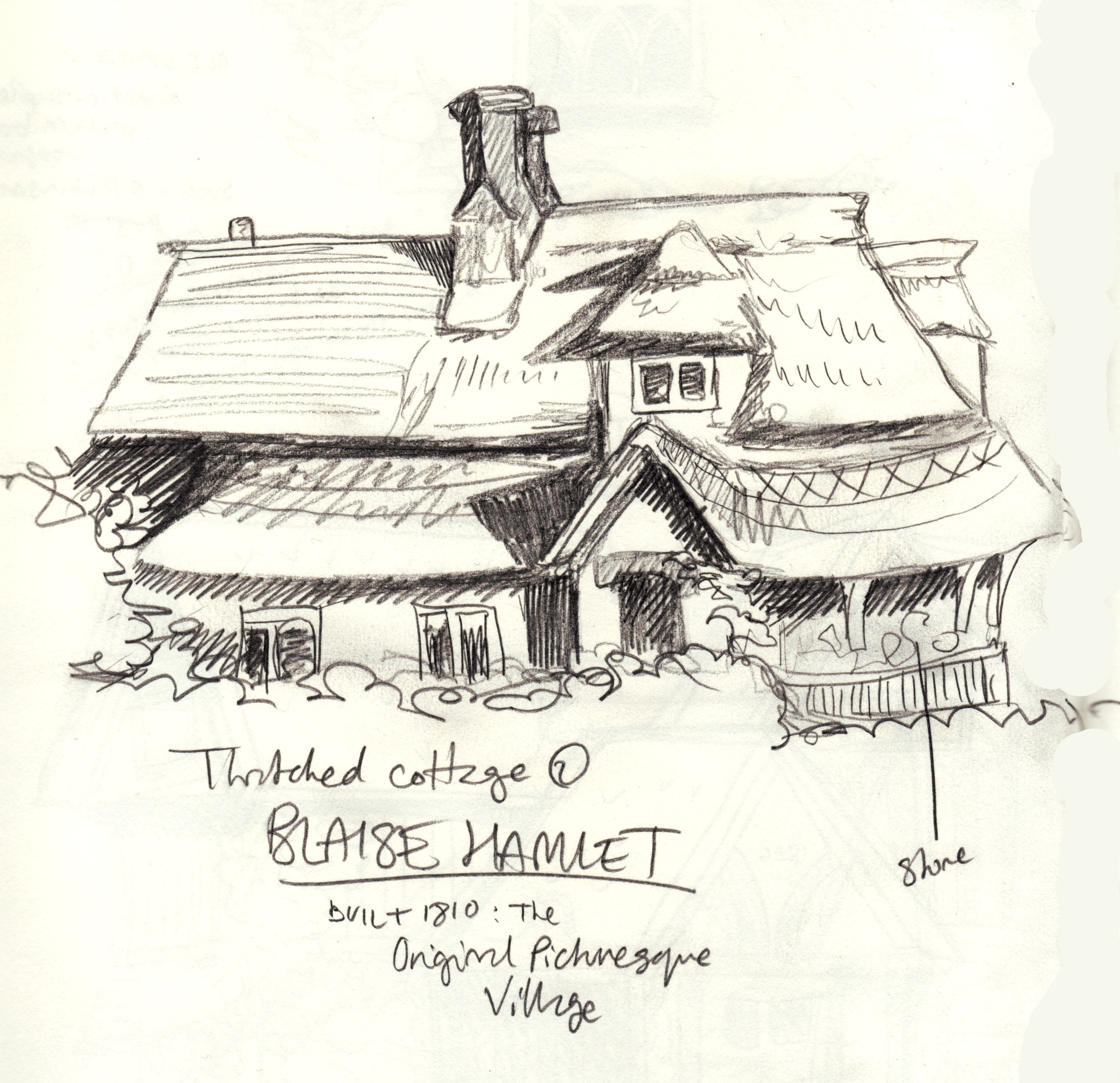
I have been exploring the idea that rural communities are perceived as the heart of some 'real' Britain, despite widespread urbanisation and the decline of countryside values. Now it seems that even the romantic vision of the chocolate-box English village with it's thatched-roofs and half-timbered frames is based on a fabrication. A fashion. A myth.
My oh my.
Research trajectory map design
I wanted to communicate the firm geographical routing of my subject as well as invoking the historical, traditional and sometimes mythical themes I plan to be touching on. Taking influence from historical and fantasty maps, as well as a hand-drawn footpath map I have of my home town, I fabricated a village landscape with pen and ink.


I did a little research into traditional olde English village and area crests. I really like the iconography intrinsic in these designs, and how instantly recognisable the style is. More research required- I'd like to be able to deconstruct these via symbol. Intrinsic storytelling. Hells yeah.

This is the final thing, hopefully it should help me maintain the focus of my research: Investigating communal identity in rural British villages.
Here are some other rather lovely maps...


And so, Villages it is...
What a coincidence. Just last week I was thinking about villages: identity and stereotypes. We're assigned to open the paper and draw out an issue from any article we liked, and guess what?

So, I guess that's fate deciding that villages it is! So yesterday was spent trying to figure out exactly what it was about villages I was really interested in. And I settled on...
How do Rural Communities form an identity for themselves?
The article above featured brief stories about villages throughout the UK- their idicoyncracies, their bizarre customs and rituals, their historic signifigance...

I love the idea that communities come together under shared rituals. And in this case, the symbol of the Hare Pie is a rallying symbol for the whole village. When it was threatened one year by the village Pastor (because of its rumoured Pagan origins) the slogan 'No Pie, No Pastor' was found dawbed acr0ss the church walls the next day. A worthless pie, priceless in symbolic value.
My research routes will be:
- Weird Village Traditions
- Pastoral Iconography and Identity
- British rural perceptions and projections
Material Definitions
[gallery columns="4"] Over my lifetime I have accumulated a lot of crap. Ragged cuddly toys I've owned since the beginning of time mold contently at the back of my cupboards; boxes overflowing with scraps of paper-tickets, doodles, letters, certificates gather dust on top of shelves; nick-nacks, torn-up books, photographs I'll never put in frames and bits that have fallen off other bits that I won't throw away just in case they come in useful again adorn every available surface.
I love clutter. I immerse myself in these bits of junk that mean nothing and everything. I collect antique cameras that I never uses, broken watches I'll never repair, and stacks upon stacks of books that I'll probably never read. Why?
I am fascinated by the qualities we project onto our possessions. I'm sure this sounds familiar. Marxist theories of Commodity fetishism have been boggling my mind for a while now, and my interest in human relationships with their material environment has been ongoing since I can remember.
They say that the whole is greater than the sum of its parts, and I believe this statement applies to personal expression through possession perfectly. That is to say, a single book; a single pen, a lamp or chair would not go far in defining a person's character as a whole. However, when put together, a selection of miscellaneous objects can weave a portrait with their symbolism, their attributed qualities, the roots of their implications.

How do we read a person's possessions? How do we draw conclusions about intangible assets through readings of tangible ones? How do we select what we consume by way of expressing the way we see ourselves, and how accurately do our possessions reflect the truth about us? Are we influenced in our opinions of others through what they own? How can we use objects to construct a narrative around an individual?
Small Town Syndrome
I'm from Norfolk. When people find this out they generally ask me [in a thick and ill-conceived West Country accent] do I live on a 'faaaaaarm', is my brother is my cousin and whether I have webbed toes.

Home is a small town on the Norfolk/Suffolk border called Diss. It has a population of around 7,000. Everybody knows everybody else. We use phrases like "that's on the 'huh" [it's a bit wonky] and describe things as "a rum do" [what a strange occurence]. Most people get married young and have babies. And yes, most people have a lot of cousins.

It is easy to make generalisations about a place, but as they say- there's no smoke without fire.
- Why are Northerners friendly and Southerners miserable?
- What changes a dialect, an accent- where do slang words originate and evolve?
- Why does a lifestyle differ from place to place?
- How did we come to forge these stereotypes?
OK, OK... so the socio-cultural, political, economical and environmental factors are obvious and hugely variable. That's not a project; that's common-sense.
What I'm interested in rather, is how behaviour begets behaviour in a small-town environment, and to focus on the material and tangible repercussions of collective social phenomena.

I want to investigate what causes localised mindsets and values, how our social networks (the figurative ones, not the digital ones I mean) cause us to think and act in certain ways;
- What are the effects of growing, living, interacting within a small, familiar community?
- How does that change the behaviour of an individual, or of a group, or even a whole neighbourhood?
- Why do we form perceptions of regions, and how do the ripple effects of close social networks manifest themselves?
- How does our environment effect us as individuals, and how does this in turn reflect on our environment?
- Would it be possible to use these patterns as a template to make predictions about a person's future?
Nicholas Christakis believes that traits are contageous. That we can 'catch' happiness and spread behavioural patterns such as over-eating or drug abuse through complex and enormous social networks. His theory is that these networks we exist within significantly affect our lives.
THIS SOUNDS FLIPPIN INTERESTING DOESN'T IT?
The Catastrophic Effect of Ugly Wallpaper
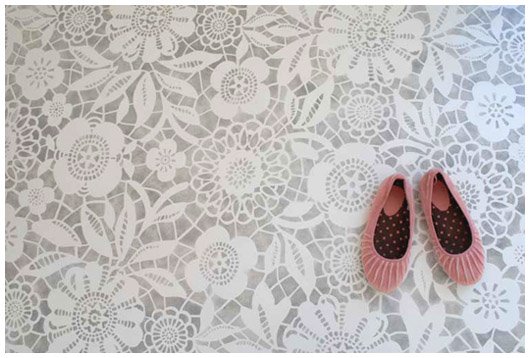
As designers, we are taught that beauty for beauty's sake is useless, and that purely decorative or ornamental artefacts are frivolous and valueless.
Oscar Wilde was one of the leaders of the late 19th Century aesthetic movement. Whilst touring the USA during the civil war, was asked why he thought America had descended into violence. His answer was simple: "because you have such ugly wallpaper".
The argument runs that human beings have done our best to despoil the greatest beauty available - nature. Compounding that is the fact that so many of us choose to live in 'ugliness' created by ourselves, so what must that do for our sense of self worth and how we value others? And finally, living in ugliness, and devaluing ourselves and those around can only, eventually lead to violence...
I like this line of thought particularly because it makes explicit the fact that we do value our surroundings, the things we own and use, and the relationships between all these things. We spend our lives building an identity - for the outside world, and for our internal world. And we do this through the stories we tell about ourselves, and also through the objects we collect around ourselves. Through an implicit and explicit selection process we build a visual version of ourselves that we trust to help tell our stories ...

I love to make things beautiful. I can't help it. I love twiddly, pointless detail. Irrelevant imagery that adds some intricacy, some added-interest, and some character to the banal and irrelevant materialism that we use to define ourselves.
I would not describe myself as a materialistic person, yet I surround myself with objects that I feel are beautiful and improve my mood and my perception of myself. My room is a mess of art books, antique cameras and wristwatches, and my walls are consistently adorned with an ever-changing rotation of beautiful imagery that strengthen my personal identity and help me communicate my traits, values and interests to others.
Why this compulsive fetishisation of material goods? Goods that are not even representative of wealth or allude to a successful or luxurious lifestyle?

My question is: can surrounding ourselves with beauty, and treating beauty as though it were an essential component of our relationship with our physical environment improve the quality of our relationships with our not only our habitats but ourselves and others?
Aesthetism: The artists and writers of the Aesthetic movement tended to hold that the Arts should provide refined sensuous pleasure, rather than convey moral or sentimental messages. As a consequence, they did not accept John Ruskin and Matthew Arnold's utilitarian conception of art as something moral or useful. Instead, they believed that Art did not have any didactic purpose; it need only be beautiful. (from Wikipedia)
Wells Blog
Duis mollis, est non commodo luctus, nisi erat porttitor ligula, eget lacinia odio sem nec elit. Maecenas faucibus mollis interdum. Nulla vitae elit libero, a pharetra augue.


Commodo cursus magna, vel scelerisque nisl consectetur et. Donec id elit non mi porta gravida at eget metus.