
Some pretty nifty research tings....
 Yesterday, not really knowing where to begin with my research and desperately needing to leave my house, I headed off to the Tate Britain. Although not completely useful it at least set me on the right track. I have worked out that I am more interested in the PERCEPTIONS that we have about the countryside, the way its inhabitants DEFINE and PROJECT their identity, and what forms this takes.
I read an interesting piece courtesy the Museum of English Rural Life which attempts to tell the story of the 20th Century countryside through artefacts. [Ref. Onkar Kular- whose exhibition I Cling to Virtue blew my mind at the V&A last week] Rather than going down the usual plough wheels and farm machinery route however, they've chosen to exhibit some icons of the countryside that have transcended rural into mainstream culture. Examples are: 
The barbour jacket, "something that began as required wear for your average hunt follower, is now to be found being sported by Lily Allen and the like."
 The Land Rover: "which first appeared in 1948 as a general purpose farming vehicle but which subsequently managed to mutate into a fashionable vehicle of choice for the metropolitan elite."

...and the Aga, "which emanated from Sweden and was brought to this country in the 1920s. By the 1950s it had become indelibly associated with the farmhouse kitchen and from thence it became not only a style icon but a potent class symbol of the second half of the twentieth century."
I liked this statement best: "If the right Landrover or the right Aga come along with the right story, we’ll collect them." ...so I'll be making the trip down to this collection in Reading quite soon I think.
As well as this, my flatmate studies media, and happened to have a book entitled British Culture, which contains an essay entitled Rurality and English Culture by Alun Howkins. Convenient eh? From this essay, I've drawn out several of his key observations about how the British relate to ideals of rural life:

- The perception that rural life is in decline has rallied communities around a 'stirring and practically based image of threatened belonging'.
- Images of pastoral beauty have been ingrained in our national sense of identity chiefly by war propaganda. Posters and official war songs including 'There'll Always be England' and 'Bluebirds over the white cliffs of Dover', and the deliberate icon of the war memorial on the village green were used to rally England under a collective National ideology.
- Rural Britain is at the heart of an idealised vision of 'real' England. The countryside has certain aesthetic specifications: Rolling hills interspersed with woodland, hedgerows lining fields. "even more importantly its ideal social structure is village with its green, pub and church clustered together. Ideal architecture stone or half-timbered topped with thatch."
- "Aesthetics, ruralistic impulse and urban decline created our image of the 'real' England: “...even before the first World War, this ideal landscape had ceased to be an exact geographical location and had become instead a set of features by which rural beauty was defined. The bringing together, before the Great War, of an elite view of urban and rural decline, a ruralist impulse, and an aesthetic of the southern created an ideal of the countryside which, all too often and too easily become 'real' England.”
So the set of criteria for which we base our vision of the countryside- the 'heart of true England' is fabricated upon a set of upper-class aesthetics and lifestyle ideologies. I like the idea that there is a formula of British Countryside.
If the image of the real Britain is false, then is a community's collective identity just imagined too?
Material Definitions
[gallery columns="4"] Over my lifetime I have accumulated a lot of crap. Ragged cuddly toys I've owned since the beginning of time mold contently at the back of my cupboards; boxes overflowing with scraps of paper-tickets, doodles, letters, certificates gather dust on top of shelves; nick-nacks, torn-up books, photographs I'll never put in frames and bits that have fallen off other bits that I won't throw away just in case they come in useful again adorn every available surface.
I love clutter. I immerse myself in these bits of junk that mean nothing and everything. I collect antique cameras that I never uses, broken watches I'll never repair, and stacks upon stacks of books that I'll probably never read. Why?
I am fascinated by the qualities we project onto our possessions. I'm sure this sounds familiar. Marxist theories of Commodity fetishism have been boggling my mind for a while now, and my interest in human relationships with their material environment has been ongoing since I can remember.
They say that the whole is greater than the sum of its parts, and I believe this statement applies to personal expression through possession perfectly. That is to say, a single book; a single pen, a lamp or chair would not go far in defining a person's character as a whole. However, when put together, a selection of miscellaneous objects can weave a portrait with their symbolism, their attributed qualities, the roots of their implications.

How do we read a person's possessions? How do we draw conclusions about intangible assets through readings of tangible ones? How do we select what we consume by way of expressing the way we see ourselves, and how accurately do our possessions reflect the truth about us? Are we influenced in our opinions of others through what they own? How can we use objects to construct a narrative around an individual?
Impostor Syndrome
 "impostor syndrome, sometimes called impostor phenomenon or fraud syndrome, is a psychological phenomenon in which people are unable to internalize their accomplishments."
This common psychological condition tends to affect high-achievers, academics and other individuals who most often could be considered in some way successful or accomplished. The victim of 'impostor syndrome' feels like a fraud, at risk of being discovered and exposed out at any time. Symptoms include:
- Dreading others' evaluations of your work or character
- Fear of not meeting others' expectations
- Attribute achievements to luck or mistake
- Rarely feel proud of a completed project or task
- Feel as though they should have accomplished more
- Fear of not being able to repeat a success
- Over-preparation, procrastination and making excuses
It is not an officially recognised psych. disorder, actually still a condition belonging to the 'pop psychology' bracket. Despite this, there have still been many extensive investigations made into its symptoms, causes and effects. Opinions differ, some believing it to be a cultural phenomenon:
"...people are left on their own, competition is intense, and there’s not much of a mentor system. They live in fear they won’t ever be good enough.”
I first read about the phenomenon a few months ago. It was in The Evening Standard or some other free paper I was reading on the bus on my way home. That particular article went on to say that the condition is gender indiscriminate, but has a tendency to strike far more women than men.
The explanation for this is that these thoughts, or the triggers for these thoughts are far more ingrained in the psychological make-up of a woman. Women tend to be far more critical and self-critical, because hundreds of years of human society has trained us to be that way. Traditionally, the woman who must secure a husband to have children, be accepted, survive. It would be the woman to leave her family and move in with her husband's, and had to keep everybody happy or risk being thrown out. This has resulted in a survival instinct to self-critique and check her behaviour constantly.
I'll confess to experiencing some of these thoughts and feelings. But how interesting the concept that anyone should fear being 'found out' of being themselves.
Surely design could do something to help or explore this? Interesting research anyways...
You can download a test to see if you're a sufferer here.
Why Do Rational People Hate to Tempt Fate?
Superstition is embedded in us. I recently read this article at Spring.org.uk "We absorb superstitions from around us, especially vigilant for their occurrence and reinforced by any events that fit the pattern, conveniently forgetting events that don't fit."

Logical people do not want to wear a murderer's jumper (Sean Hall- find notes)
When we're kids we can believe that our toys might come alive at night, that Father Christmas comes down the chimney or that there's a monster under the bed. It is only after we accumulate experience that our sense of 'magic' is dispelled and we begin to lose our naivity and willingness to believe in phenomena.
Aside from things like religion, paranoid UFO enthusiasts and superstitious old ladies (let's call these cases to compare against) we mostly live in an age and culture of cynicism and disbelief.
What interests me about the above article, is that it suggests that rather than being merely naivity or a willingness to believe in irrational phenomena it is something that is imbedded in us- part of our psychological make-up. If this is true I'd like to know why, how this might have manifested itself throughout time, and how I might be able to exploit this fact to recapture the imagination of even the most disenchanted critic.
I want to research and investigate ways in which superstition, mythology and fantasy form an integral part of the tapestry of our lives. Folklore and stories affecting behaviour- social ritual and ceremony.
How can I weave a bit of magic back into life?

- Immersive environments,
- experiential design,
- artefacts.
- Ways in which superstitions are already exploited.
- Psychological causes and effects of superstition
The Catastrophic Effect of Ugly Wallpaper
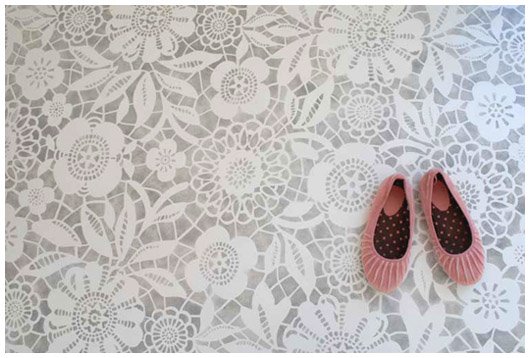
As designers, we are taught that beauty for beauty's sake is useless, and that purely decorative or ornamental artefacts are frivolous and valueless.
Oscar Wilde was one of the leaders of the late 19th Century aesthetic movement. Whilst touring the USA during the civil war, was asked why he thought America had descended into violence. His answer was simple: "because you have such ugly wallpaper".
The argument runs that human beings have done our best to despoil the greatest beauty available - nature. Compounding that is the fact that so many of us choose to live in 'ugliness' created by ourselves, so what must that do for our sense of self worth and how we value others? And finally, living in ugliness, and devaluing ourselves and those around can only, eventually lead to violence...
I like this line of thought particularly because it makes explicit the fact that we do value our surroundings, the things we own and use, and the relationships between all these things. We spend our lives building an identity - for the outside world, and for our internal world. And we do this through the stories we tell about ourselves, and also through the objects we collect around ourselves. Through an implicit and explicit selection process we build a visual version of ourselves that we trust to help tell our stories ...

I love to make things beautiful. I can't help it. I love twiddly, pointless detail. Irrelevant imagery that adds some intricacy, some added-interest, and some character to the banal and irrelevant materialism that we use to define ourselves.
I would not describe myself as a materialistic person, yet I surround myself with objects that I feel are beautiful and improve my mood and my perception of myself. My room is a mess of art books, antique cameras and wristwatches, and my walls are consistently adorned with an ever-changing rotation of beautiful imagery that strengthen my personal identity and help me communicate my traits, values and interests to others.
Why this compulsive fetishisation of material goods? Goods that are not even representative of wealth or allude to a successful or luxurious lifestyle?

My question is: can surrounding ourselves with beauty, and treating beauty as though it were an essential component of our relationship with our physical environment improve the quality of our relationships with our not only our habitats but ourselves and others?
Aesthetism: The artists and writers of the Aesthetic movement tended to hold that the Arts should provide refined sensuous pleasure, rather than convey moral or sentimental messages. As a consequence, they did not accept John Ruskin and Matthew Arnold's utilitarian conception of art as something moral or useful. Instead, they believed that Art did not have any didactic purpose; it need only be beautiful. (from Wikipedia)
Wells Blog
Duis mollis, est non commodo luctus, nisi erat porttitor ligula, eget lacinia odio sem nec elit. Maecenas faucibus mollis interdum. Nulla vitae elit libero, a pharetra augue.


Commodo cursus magna, vel scelerisque nisl consectetur et. Donec id elit non mi porta gravida at eget metus.