
Rushey Green Map Unveiling
Today was the unveiling of the Rushey Green community heritage map in Catford, South London. This project has been 6 months in the making, and seeing it finally in print was bloomin satisfying. Also, received first-ever bunch of flowers from the Mayor of Catford. So yeah, that was a double bonus.
This project couldn't really have been better suited to me- map drawing, community and historical geekery all rolled into one. It's an exercise in creating history visible in a way which is designed to reinforce a sense of local pride and identity.

The fine people at the Rushey Green Residents' Committee were the ones handing over the completed content this time around, but in future I think I might initiate the research myself. Gotta love archive snooping and interviewing history buffs.
Back on the blog-horse.
It's been a long two weeks, and despite my blog neglection it has been pretty busy too. It's been particularly interesting on the contextual front, and a wealth of new and very clever stuff has implanted itself in my brain courtesy of people like Benedict Anderson and Arjun Appadurai. On top of this, some very clever and inspiring artists like Karen Guthrie and Nina Pope, Tom Hunter and James McKinnon, as well as Goldsmiths' very own Pete Rodgers have given me more than my fair portion's food for thought. But, if I go on like this the word count of this blog post will be longer than my dissertation.
So what follows is a very brief summary of how my project has changed and evolved over the last two weeks or so. I really hope it makes sense...
Last week I wrote a bit about Urban myth and legend, having been interested in Nessie and the Black Shuck of Norfolk/Suffolk. I came to wondering about how a character comes to exist on a level of communal consciousness, and how a locality's desire to make tangible some recognition of its existance- within their minds- results in a system of half-belief: we know it's not real yet we like to treat it as though it could be. In other words, we'd like to remember it that way. In Bungay, the local running club is named after a hell-hound.
"The long-term reproduction of a neighbourhood that is simultaneously practiced, valued and taken-for-granted depends on the seamless interaction of localised spaces and times with local subjects possessed of the knowledge to reproduce locality." (Appadurai, 1996)
From here, I've become extremely interested in collective memory, knowledge and remembering. I've already discovered a lot of evidence that suggests that familiarity within our environments (knowing the history, people, stories and physical spaces) precipitates contentedness and community. It is almost certainly this that makes the tight-knit rural communities of England seem so ideal. They visualise and mark their history, they tell stories and talk about local heroes and gossip. Adapting Marx: "local knowledge is not only in itself, but of itself."
So I've been investigating communal knowledge, memory (Benedict Anderson has some wonderful things to say on the subject of Imagined Communities) and nostalgia. Why and how we preserve and value the past, and ways in which we live our history alongside our present.

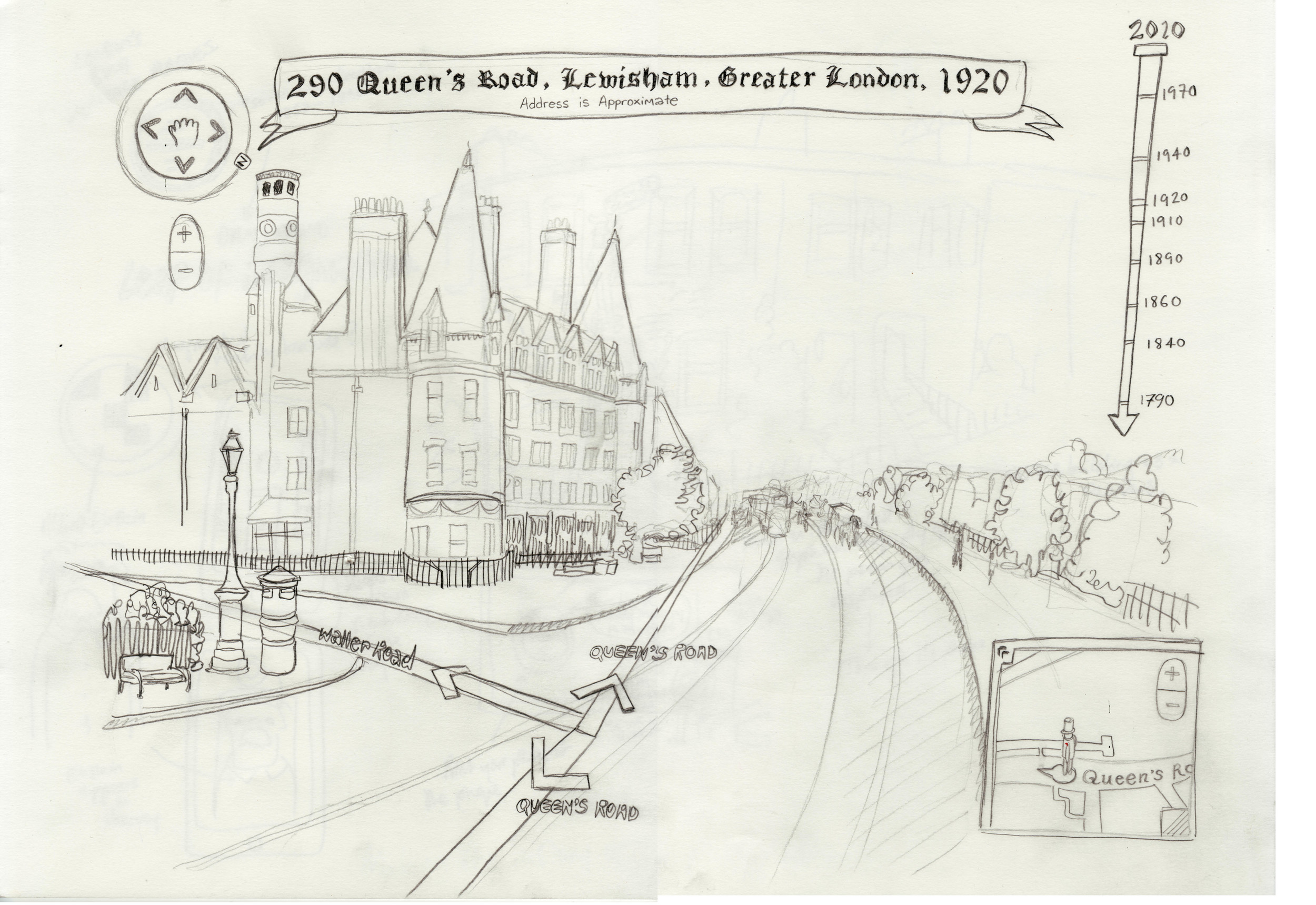
Aaghh, if I hadn't left this post so long I would detail my visits to Dennis Sevvers' house and Museum of London as well as my interview with a Medieval reenactor, but it will take forever...
Thinking about ways in which we memorialise things, I read a lovely quote by the lovely Stephen Fry: "We all pay lip service to the idea that yesterday makes today, but it is difficult to make the imaginative leap that truly connects us to our past... Blue Plaques, in their simple way, address this defect... for me, they are a unique imaginative portal into the past, for in my mind all Blue Plaques are contemporaneous, which is to say, the people commemorated by them are in their buildings now."
I love the blue plaque scheme too, but equally am always left faintly under-satisfied whenever I don't know who someone is, or their situation while they lived there. What if we could make their history more real, more visible?


After my visit to the Museum of London, seeing their London's Voices projects and also discovering the work of somewhere.org and Tom Hunter and James McKinnon's The Ghetto, I've become more interested in the idea of subjective histories or stories becoming part of a general community memory or consciousness. In Robbie (the medieval reenactor)'s words: The battle takes shape through a "multiplicity of subjective curators". And in the same way, a picture of a history (accurate or not) is painted on a woven tapestry of personal reminiscence. I LOVE this.

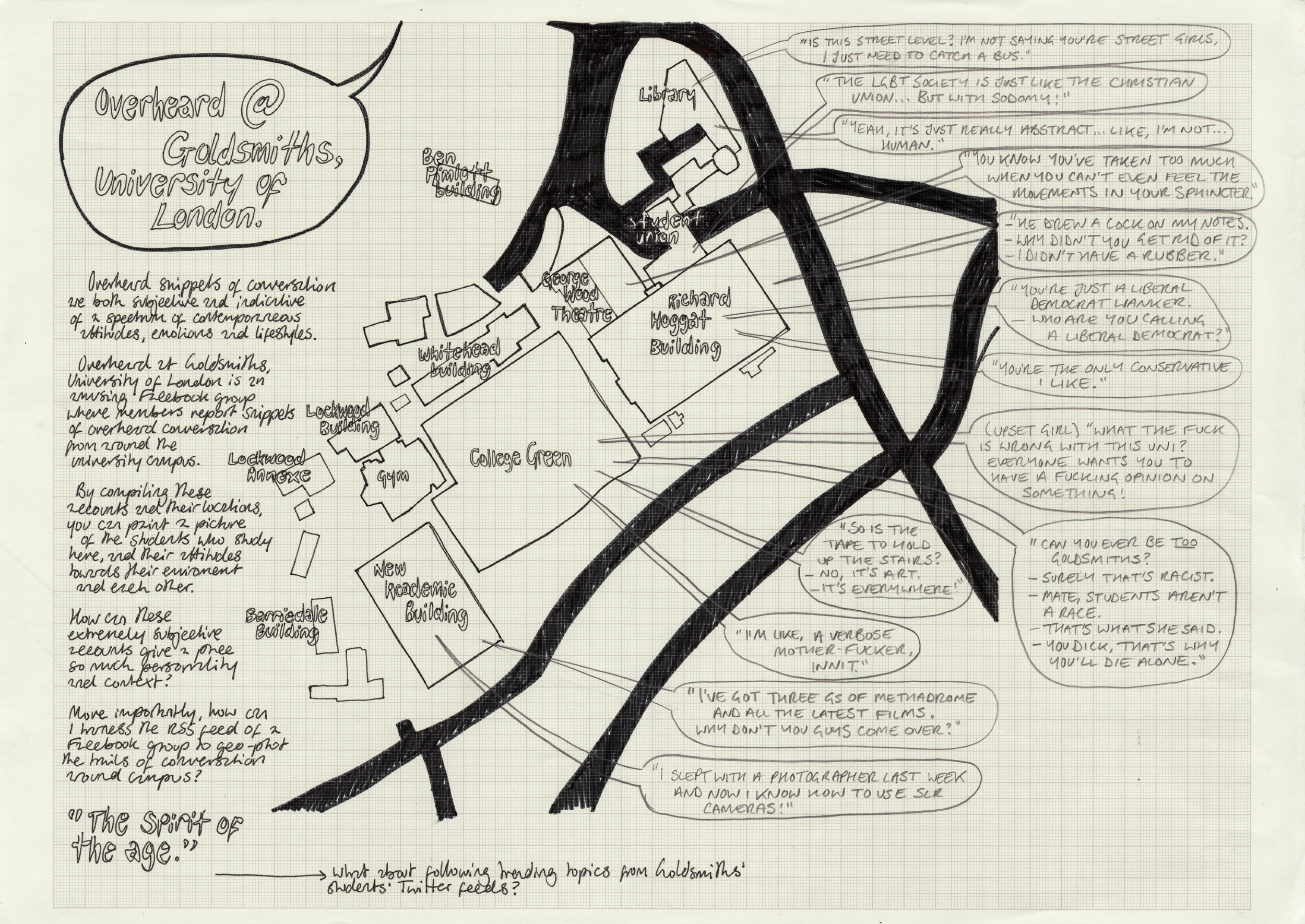
All of these thoughts and ideas are very much in their emryonic stages at this point, but I'm feeling pretty good about this.
My mantra has become 'Stories are inclusive'. Now I just need to find some stories!
Urban Chintz
So I've been thinking a lot about countryside artefacts, and thinking more about how it is that we've come to have images of pastoral landscapes and chocolate-box cottages engraved onto what remains of our national id.
I've also been thinking about what Oscar Wilde said about wallpaper (see this post from week one). And then looking at some of William Morris' designs for it. I recently happened upon the Guardian's Homes supplement part of the paper left on a bus seat which contained series of articles in which city homes and interiors sought to recreate the qualities on country living. It's interesting to me that we use these props as ways of borrowing what is essentially the facade of a particular lifestyle and displace it deliberately and obviously- all through a few bits of china.

We tie most of our associations of idealised country life into rural and natural imagery, and this is most often displayed on objects which are closely aligned with traditional social rituals and environments. Like tea-sets, for example.
As the population of rural England continues to grow, perhaps this traditional imagery can be subverted to represent a more realistic image of Britain: the urban landscape rather than the'cultural fiction' of the pastoral. By emulating the rose-tinted styling of china, wallpaper and chintz but with symbols of the city instead of the country, can I nurture a more idealised and romanticised view of urban Britain and help promote a more attainable way of life?


And then I got a little carried away and made a bit more...


I must admit, I really like the idea of turning the most florally-repugnant objects of the most elderly-relative variety into bad-ass 'urban chintz'. Potentially very amusing.


So... modelling week didn't quite happen...
It's been a weird week in which I have generally been procrastinating and desperately trying to avoid my project. Although I'm not quite sure why.
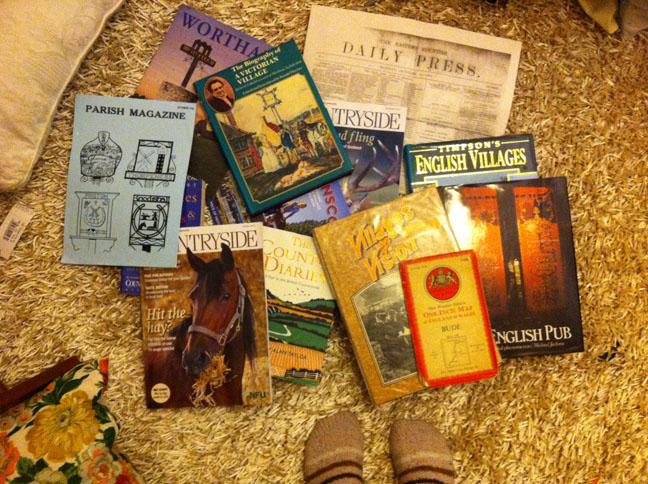
The reading is helping. Though every time I pick up a different book or magazine a million new avenues of exploration seem to open up and I find myself drowning in content.

My studio space is a hotch-potch of mini-projects I've been doing over this first half-term. These include:
- A briefing document
- A drawing source book
- A village tableau scene
- Several drawings of urban/rural fusion birdhouses
- A picture of a thatched flat-block
- Some laser-cut hand-illustrated sheep
- A Swallows and Amazons-esqe research trajectory map
There is a clear connection between all of these objects, but so far I have not quite pinned it down.

For this weeks' enterprise, I did a study of the iconography of English village signposts. I'm extremely interested in the imagery that communities use to identify themselves, and I'm sure I remember reading something by Viktor Papanek last year about the totems that Native American tribes used to rally around to enforce community bonds. (Note to self: look this up)
 It was really interesting to see what kind of icons recurred: churches, animals, pastoral/natural images, local landmarks, historical heroes, crests, dates and local industry symbols all featured highly as symbols of specific locations. This has made me give a lot of thought to the nature of collective identity: shared memory, traditions, experience. How is it represented and reinforced by tangible imagery? Does it really strengthen community bonds as it did for the tribal Indians in old America? What if the urban villages of London had a greater sense of collective identity?
 Could defining the identity of these areas in a similar way to small rural communities give the residents here a clearer sense of community?
Arts and Crafts day...
Seeing as it's image week and I'm doing a project about villages, I thought it might be sensible to actually go to one. So here I am, back on the sunny Norfolk/Suffolk divide in the heart of lovely rural East Anglia. Smell that Autumn air. And complain about the weather, because it's absolutely pissing it down. Not quite sure where to start, I went on an inspiration mission looking for images that might effectively 'capture the essence' of what the Villages project is all about. Seeing as I myself am not yet sure about this, I thought this could be a little bit of a struggle. Out on my little drive, one thought immediately struck me: the countryside ain't always quite as pretty as you expect...
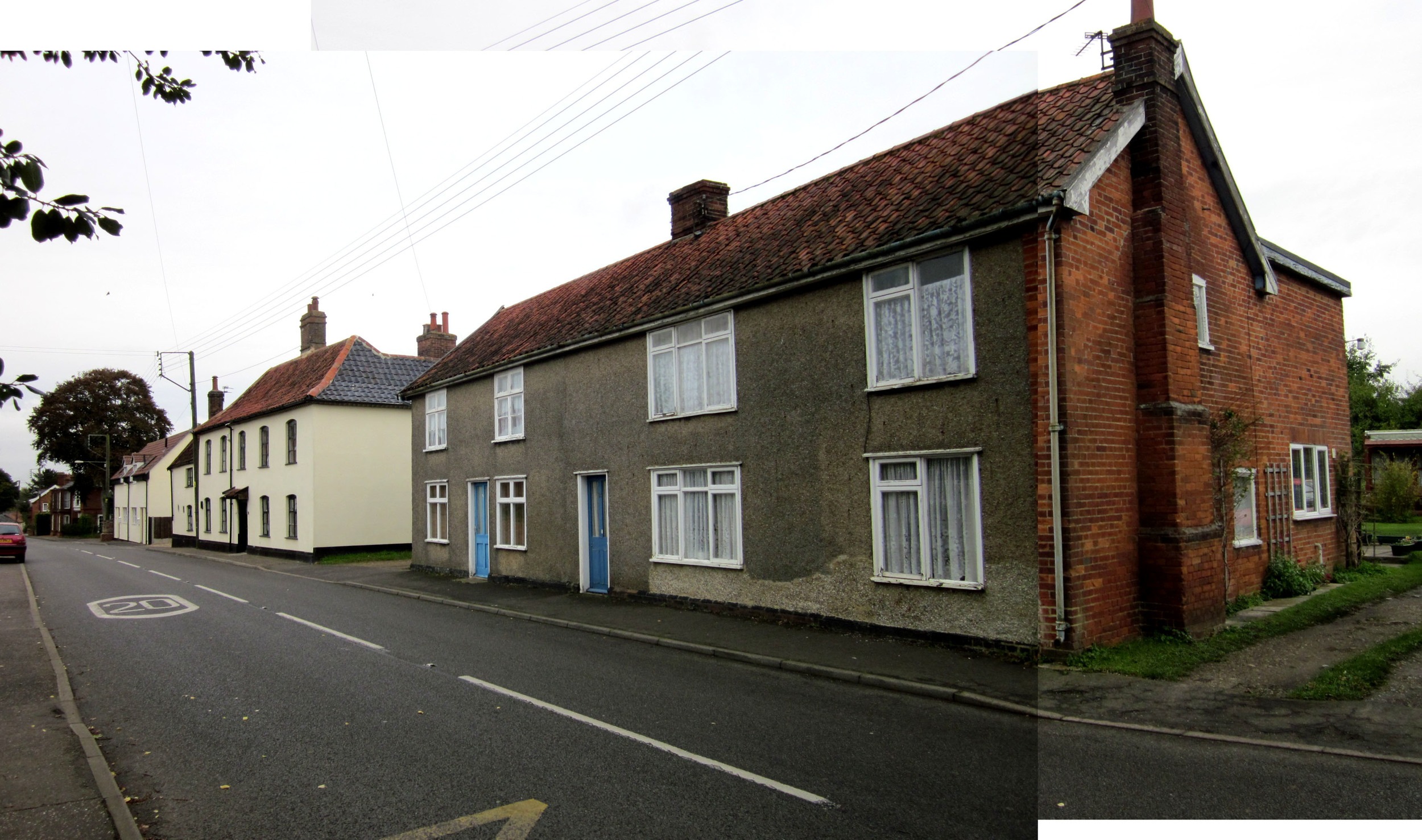
But in general, the area does still come wrapped up in a chocolate-box bow. All over the place there are still signs for village fêtes and farm-shops, and the local paper shop is rammed with historical books about the area. These countryside folk really are happy to be so. I forget this sometimes now that I'm down in London nearly all year. The ideal of country living is alive and kicking. So, even if it's not always as pretty as we think it should be, the ethos lives on regardless.
My project has been very wrapped up in aesthetics so far. The images we rally around, the ones we hide behind, the ones we project in order to represent how truly lovely it is to be in the countryside. There's a simple and charming naïvity to it. And this was what I decided to try and capture.
I went on a little road-trip collecting photos with my shitty compact camera in the dismal weather, and successfully came back with a whole heap of examples of buildings found in typical rural idyll...


But the light was crap, and it got wetter and colder until I couldn't even be arsed getting out of the car. Feeling like a bit of a child I ventured to the local toy shop and bought a load of PVA, coloured card and crêpe paper, before buggering off home to a cup of tea, my mummy and some quality rainy-day activities...
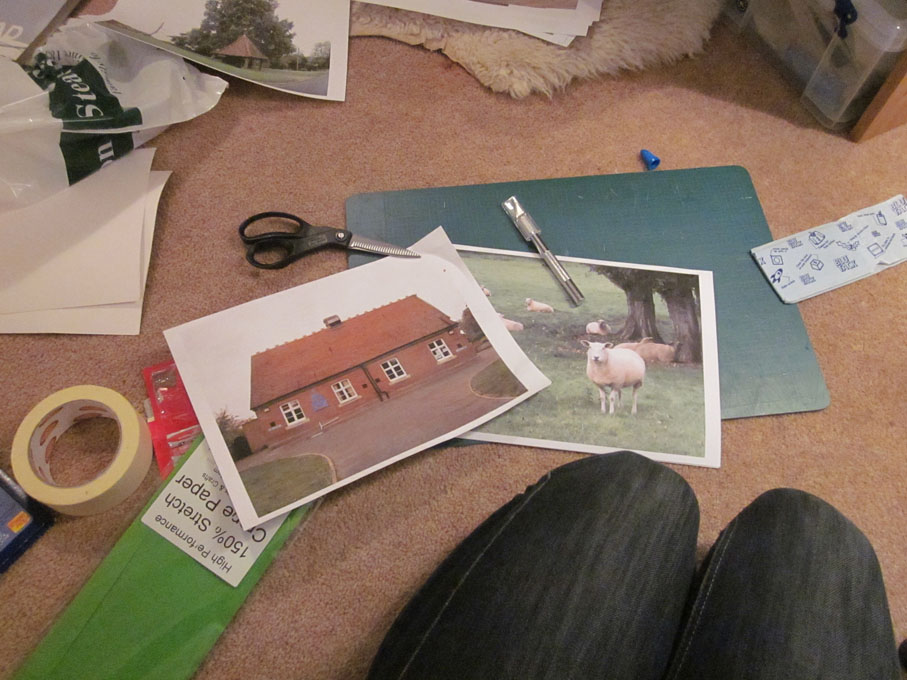


I had the idea of like a nativity tableau... you know how they look like a proper three-dimensional scene but as soon as you move a bit you realise they're just flimsy bits of card and straw? The thought is sincere,but it's also a little naïve and idealistic- a bit of a fantasy, really. And their's no denying that although the final product may look pretty enough from the right angle, ultimately, it's only gonna fall over or get trodden on...

I had a lot of trouble getting a good shot. Lighting was hilarious. I think I must have had every single lamp in the house gathered around my desk. I've been using my Canon compact for everything, and as my parents are also techno-phobes their was no SLR or DSLR to be found. Sadly I have had to make do with my final photograph...

Yes, I am a child. A bad-at-photography child. But I had a very fun day.
(PS. Chris, does this constitute 'messy play'?)
MINIATURE VILLAGE!
Last Wednesday I took myself off for a little jaunt around Bekonscot Miniature Village . It was flippin awesome.
[gallery columns="4"]
The place is huge, and no detail's been spared. This microcosm of the 'village world' captures the essence of rural British communities: choc full of the standard landmarks: churches, local businesses, farms, pubs, village greens. Every landscape sees tiny sculpted people going about their daily lives: There's a hunting party, cricket players on the green, kiddies around the maypole, morris dancers in the village square; church-goers, gypsy camps, drunk old men at the pub, old ladies hanging out the washing.... a neat little summary of the cliché of country life.
What gets me about these clichés... they're not just clichés. These are traditions, environments and scenarios which are deliberately practiced and reinforced by the country-folk. They bring greater value, and greater meaning to their way of life and the way they see themselves.
The miniature village is the perfect demonstration of the symbols and associations with which the typical countryside community communicates itself. So what do these symbols mean to people, what effect do they have, and could their associative qualities and effects be just as powerful if applied in the outside world?
Some pretty nifty research tings....
 Yesterday, not really knowing where to begin with my research and desperately needing to leave my house, I headed off to the Tate Britain. Although not completely useful it at least set me on the right track. I have worked out that I am more interested in the PERCEPTIONS that we have about the countryside, the way its inhabitants DEFINE and PROJECT their identity, and what forms this takes.
I read an interesting piece courtesy the Museum of English Rural Life which attempts to tell the story of the 20th Century countryside through artefacts. [Ref. Onkar Kular- whose exhibition I Cling to Virtue blew my mind at the V&A last week] Rather than going down the usual plough wheels and farm machinery route however, they've chosen to exhibit some icons of the countryside that have transcended rural into mainstream culture. Examples are: 
The barbour jacket, "something that began as required wear for your average hunt follower, is now to be found being sported by Lily Allen and the like."
 The Land Rover: "which first appeared in 1948 as a general purpose farming vehicle but which subsequently managed to mutate into a fashionable vehicle of choice for the metropolitan elite."

...and the Aga, "which emanated from Sweden and was brought to this country in the 1920s. By the 1950s it had become indelibly associated with the farmhouse kitchen and from thence it became not only a style icon but a potent class symbol of the second half of the twentieth century."
I liked this statement best: "If the right Landrover or the right Aga come along with the right story, we’ll collect them." ...so I'll be making the trip down to this collection in Reading quite soon I think.
As well as this, my flatmate studies media, and happened to have a book entitled British Culture, which contains an essay entitled Rurality and English Culture by Alun Howkins. Convenient eh? From this essay, I've drawn out several of his key observations about how the British relate to ideals of rural life:

- The perception that rural life is in decline has rallied communities around a 'stirring and practically based image of threatened belonging'.
- Images of pastoral beauty have been ingrained in our national sense of identity chiefly by war propaganda. Posters and official war songs including 'There'll Always be England' and 'Bluebirds over the white cliffs of Dover', and the deliberate icon of the war memorial on the village green were used to rally England under a collective National ideology.
- Rural Britain is at the heart of an idealised vision of 'real' England. The countryside has certain aesthetic specifications: Rolling hills interspersed with woodland, hedgerows lining fields. "even more importantly its ideal social structure is village with its green, pub and church clustered together. Ideal architecture stone or half-timbered topped with thatch."
- "Aesthetics, ruralistic impulse and urban decline created our image of the 'real' England: “...even before the first World War, this ideal landscape had ceased to be an exact geographical location and had become instead a set of features by which rural beauty was defined. The bringing together, before the Great War, of an elite view of urban and rural decline, a ruralist impulse, and an aesthetic of the southern created an ideal of the countryside which, all too often and too easily become 'real' England.”
So the set of criteria for which we base our vision of the countryside- the 'heart of true England' is fabricated upon a set of upper-class aesthetics and lifestyle ideologies. I like the idea that there is a formula of British Countryside.
If the image of the real Britain is false, then is a community's collective identity just imagined too?
Wells Blog
Duis mollis, est non commodo luctus, nisi erat porttitor ligula, eget lacinia odio sem nec elit. Maecenas faucibus mollis interdum. Nulla vitae elit libero, a pharetra augue.


Commodo cursus magna, vel scelerisque nisl consectetur et. Donec id elit non mi porta gravida at eget metus.