
Excalibur

It's a drizzly day in South East London, and I'm weaving my way through the mazes of Lewisham's council estates, which only seem to amplify the weather. The homogenous grey terraces and flat blocks are grey in both colour and nature. I'm on my way to Catford, and the Excalibur Estate.

In case you're unfamiliar with the Excalibur Estate- where the streets are named after Arthurian legend- it is the largest remaining post-war prefab community in Europe, and the only one left in London. Built in 1948 by German and Italian prisoners of war to rehouse those left homeless by the blitz, the prefabs were designed to last between 10-15 years, but after more than sixty, they're still standing- and so is the community that has grown up around them. Despite six years of tireless campaigning by local residents and English Heritage, the future of Excalibur is looking bleak. The council have approved plans to 'regenerate' the estate- the historical prefabs will be torn down, to make way for yet another block of flats.
 Jim and Lorraine Blackender formed the Worried Tenants Group in opposition to the proposed demolition of their community, and kindly invited me into their (beautiful) home. They have been living in their prefab on Excalibur for twenty years, but the last six years have been a whirlwind of bureaucracy, media hype and worry. The thing is, this is more than a bunch of prefab homes, more than an marker of working-class history, more than roof over their heads- this is a thriving community, and the most exceptional phenomenon of neighbourliness remaining in what is our frequently alienated city. There are generations of families living alongside each other. Some residents have been here since the estate was erected. It has such a low crime rate that the police no longer even bother to patrol here, and kids can play safely in the street- parents comforted by the fact that there will always be a pair of friendly eyes to watch over them.

The residents of Excalibur are bound together by the history of the estate, as well as the buildings themselves. The buildings are what make the community- and despite Lewisham councils assurances that it will keep the community together after demolition- Jim and Lorraine know that the reality will be just another council estate with all the distrust, alienation and crime that that brings with it.
"There are waiting lists of people who want to live in a prefab on the estate. In the council flats across the road the waiting list is to get out."

You can read all about the efforts being made to rescue the Excalibur estate at Jim's campaign website as well as in numerous national press articles from the past few years (just Google search).
My project to date has been about investigating communities. Why do we have such successful tight-knit communities out in the sticks (where I'm from) and yet in the cities any sense of human significance is lost? The Excalibur estate shows that communities can and do exist within the city limits, and they're as wonderful if not better than anything you'll find in the countryside.There are people who dedicate their lives to conserving, rescuing, and building communities every day, but their stories and their efforts are disappearing into the mists of time- just like our sense of neighbourliness.

History frames and contextualises our sense of place- our sense of each other. Maybe we're making the wrong kind of history memorable. What if what's available in the history books and museums isn't good enough? Fuck the hard facts of battle dates and grandiose architecture, this is what really matters. This is the kind of history that's relevant.
And if we don't know about it, if we are unaware that there is anything there to preserve, then who is going to do anything about it?

My mission is hence to tell the stories of the communities and individuals who are struggling tirelessly against the individualism and distrust that thrives. They are still here, they do deserve our attention. I'm going to help them get it.
The Angel of History
His face is turned towards the past. Where we perceive a chain of events, he sees one single catastrophe which keeps piling wreckage upon wreckage and hurls it in front of his feet. The angel would like to stay, awaken the dead, and make whole what has been smashed. But a storm is blowing from Paradise; it has got caught his wings with such violence that the angel can no longer close them. This storm irresistibly propels him into the future to which his back is turned, while the pile of debris before him grows skyward. This storm is what we call progress. Walter Benjamin
MINIATURE VILLAGE!
Last Wednesday I took myself off for a little jaunt around Bekonscot Miniature Village . It was flippin awesome.
[gallery columns="4"]
The place is huge, and no detail's been spared. This microcosm of the 'village world' captures the essence of rural British communities: choc full of the standard landmarks: churches, local businesses, farms, pubs, village greens. Every landscape sees tiny sculpted people going about their daily lives: There's a hunting party, cricket players on the green, kiddies around the maypole, morris dancers in the village square; church-goers, gypsy camps, drunk old men at the pub, old ladies hanging out the washing.... a neat little summary of the cliché of country life.
What gets me about these clichés... they're not just clichés. These are traditions, environments and scenarios which are deliberately practiced and reinforced by the country-folk. They bring greater value, and greater meaning to their way of life and the way they see themselves.
The miniature village is the perfect demonstration of the symbols and associations with which the typical countryside community communicates itself. So what do these symbols mean to people, what effect do they have, and could their associative qualities and effects be just as powerful if applied in the outside world?
Research trajectory map design
I wanted to communicate the firm geographical routing of my subject as well as invoking the historical, traditional and sometimes mythical themes I plan to be touching on. Taking influence from historical and fantasty maps, as well as a hand-drawn footpath map I have of my home town, I fabricated a village landscape with pen and ink.


I did a little research into traditional olde English village and area crests. I really like the iconography intrinsic in these designs, and how instantly recognisable the style is. More research required- I'd like to be able to deconstruct these via symbol. Intrinsic storytelling. Hells yeah.

This is the final thing, hopefully it should help me maintain the focus of my research: Investigating communal identity in rural British villages.
Here are some other rather lovely maps...


Empathic Nostalgia of the 1970s Wristwatch
Two wonderful friends of mine bought me this little beauty for my birthday last August. Bling bling BLING. I wasn't even born when these were released, so why do I feel like I should be wearing a school dress and throwing paper aeroplanes around when I'm wearing it? Aah, the wonderful sensation of Consumer Fetishism. Cool as hell.


Here are some other extremely fandangulous examples of retro time-pieces...


L-R: Old Stock Lanco Direct Time: the Swiss answer to the LED in the mid Seventies (£150); Classic Camif Early 60's Dress Watch (£85)


L-R: Old Stock Gruen LED (£250); 1980's Chromachron Quartz Watch (£235)


L-R: Baschmakofff Direct Time Automatic 1974 (£550); Amida Digitrend Direct Time Steel Watch (£750)
....and the Mac Daddy:

A new, hand made "Nixie Tube" clock.
These were the "digital" display tubes that you used to see when watching the Apollo missions in the 60's. In fact some of these tubes were originally NASA ones! Inside a glass tube, ten filaments are shaped to form the digits 0 - 9 which when lit give off a warm orange / violet glow that can be read from quite a distance...
All images and price references courtesy 70s-watches.com. This guy has way, WAY too many watches. It makes me extremely happy.
The Visual Essay

We live in an increasingly less literate society. By this I do not mean that we are becoming illiterate. But that we are reading less. Why is this? There are multiple factors: TV, fast-paced culture and a shift in prevalent cultural values have made us lazy. We have less disposable time, and so seek instant gratification. Entertainment and leisure overriding education and intellectualism as lifestyle qualities.
We inhabit a visual culture that constantly bombards us with striking imagery, containing layers of cognitive meaning and complexity that we are able to process almost instantly.
 As this Visual culture continues to gather momentum, the nature of more traditional communication media is being forced to evolve along with it. Magazines for example- with tabloid-style publications like 'Zoo' and 'Heat', we no longer have to 'read' a magazine; but rather we 'watch it'. Articles will feature an image, a headline, and a brief descriptive strap-line so that you can get the entire gist of the feature without reading more than three sentences. Information is structured in clear, easy-to-follow formulas like bulleted lists, and typography is designed to keep your eyes constantly stimulated.
It is probably no coincidence then that the popularity of graphic novels has grown tremendously over the course of the last decade. According to industry observer ICv2, sales of graphic novels in the US and Canada has grown from $75 million in 2001, to $375 million in 2007.

So everybody likes superheroes, right? Wrong. Comic books are rising to their new-found position as a valid literary form- the birth of the Graphic Novel. Now that medium too is evolving. In Web 2.0, the popularity of the web comic is growing, and the possibilities for the graphic novel as both an artistic and literary format in its own right are just being discovered...
Is there something in information structured by imagery that makes it clearer, or easier to understand? Or is it just a case of attractive visual stimulation and laziness of the everyday user?
Either way... I do kind of love it. And I say that as an ardent reader.

References:
- Rick Poynor- Obey the Giant
- Scott McCloud's books and Ted Talk.
- A large collection of comic books.
The Catastrophic Effect of Ugly Wallpaper
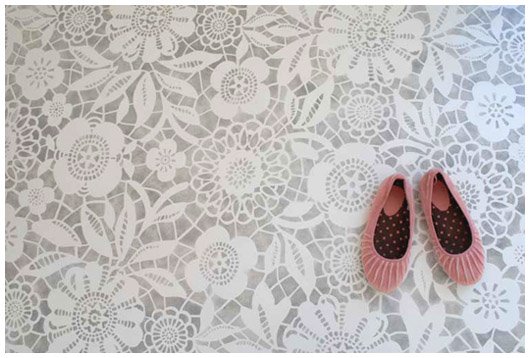
As designers, we are taught that beauty for beauty's sake is useless, and that purely decorative or ornamental artefacts are frivolous and valueless.
Oscar Wilde was one of the leaders of the late 19th Century aesthetic movement. Whilst touring the USA during the civil war, was asked why he thought America had descended into violence. His answer was simple: "because you have such ugly wallpaper".
The argument runs that human beings have done our best to despoil the greatest beauty available - nature. Compounding that is the fact that so many of us choose to live in 'ugliness' created by ourselves, so what must that do for our sense of self worth and how we value others? And finally, living in ugliness, and devaluing ourselves and those around can only, eventually lead to violence...
I like this line of thought particularly because it makes explicit the fact that we do value our surroundings, the things we own and use, and the relationships between all these things. We spend our lives building an identity - for the outside world, and for our internal world. And we do this through the stories we tell about ourselves, and also through the objects we collect around ourselves. Through an implicit and explicit selection process we build a visual version of ourselves that we trust to help tell our stories ...

I love to make things beautiful. I can't help it. I love twiddly, pointless detail. Irrelevant imagery that adds some intricacy, some added-interest, and some character to the banal and irrelevant materialism that we use to define ourselves.
I would not describe myself as a materialistic person, yet I surround myself with objects that I feel are beautiful and improve my mood and my perception of myself. My room is a mess of art books, antique cameras and wristwatches, and my walls are consistently adorned with an ever-changing rotation of beautiful imagery that strengthen my personal identity and help me communicate my traits, values and interests to others.
Why this compulsive fetishisation of material goods? Goods that are not even representative of wealth or allude to a successful or luxurious lifestyle?

My question is: can surrounding ourselves with beauty, and treating beauty as though it were an essential component of our relationship with our physical environment improve the quality of our relationships with our not only our habitats but ourselves and others?
Aesthetism: The artists and writers of the Aesthetic movement tended to hold that the Arts should provide refined sensuous pleasure, rather than convey moral or sentimental messages. As a consequence, they did not accept John Ruskin and Matthew Arnold's utilitarian conception of art as something moral or useful. Instead, they believed that Art did not have any didactic purpose; it need only be beautiful. (from Wikipedia)
Wells Blog
Duis mollis, est non commodo luctus, nisi erat porttitor ligula, eget lacinia odio sem nec elit. Maecenas faucibus mollis interdum. Nulla vitae elit libero, a pharetra augue.


Commodo cursus magna, vel scelerisque nisl consectetur et. Donec id elit non mi porta gravida at eget metus.