
Back on the blog-horse.
It's been a long two weeks, and despite my blog neglection it has been pretty busy too. It's been particularly interesting on the contextual front, and a wealth of new and very clever stuff has implanted itself in my brain courtesy of people like Benedict Anderson and Arjun Appadurai. On top of this, some very clever and inspiring artists like Karen Guthrie and Nina Pope, Tom Hunter and James McKinnon, as well as Goldsmiths' very own Pete Rodgers have given me more than my fair portion's food for thought. But, if I go on like this the word count of this blog post will be longer than my dissertation.
So what follows is a very brief summary of how my project has changed and evolved over the last two weeks or so. I really hope it makes sense...
Last week I wrote a bit about Urban myth and legend, having been interested in Nessie and the Black Shuck of Norfolk/Suffolk. I came to wondering about how a character comes to exist on a level of communal consciousness, and how a locality's desire to make tangible some recognition of its existance- within their minds- results in a system of half-belief: we know it's not real yet we like to treat it as though it could be. In other words, we'd like to remember it that way. In Bungay, the local running club is named after a hell-hound.
"The long-term reproduction of a neighbourhood that is simultaneously practiced, valued and taken-for-granted depends on the seamless interaction of localised spaces and times with local subjects possessed of the knowledge to reproduce locality." (Appadurai, 1996)
From here, I've become extremely interested in collective memory, knowledge and remembering. I've already discovered a lot of evidence that suggests that familiarity within our environments (knowing the history, people, stories and physical spaces) precipitates contentedness and community. It is almost certainly this that makes the tight-knit rural communities of England seem so ideal. They visualise and mark their history, they tell stories and talk about local heroes and gossip. Adapting Marx: "local knowledge is not only in itself, but of itself."
So I've been investigating communal knowledge, memory (Benedict Anderson has some wonderful things to say on the subject of Imagined Communities) and nostalgia. Why and how we preserve and value the past, and ways in which we live our history alongside our present.

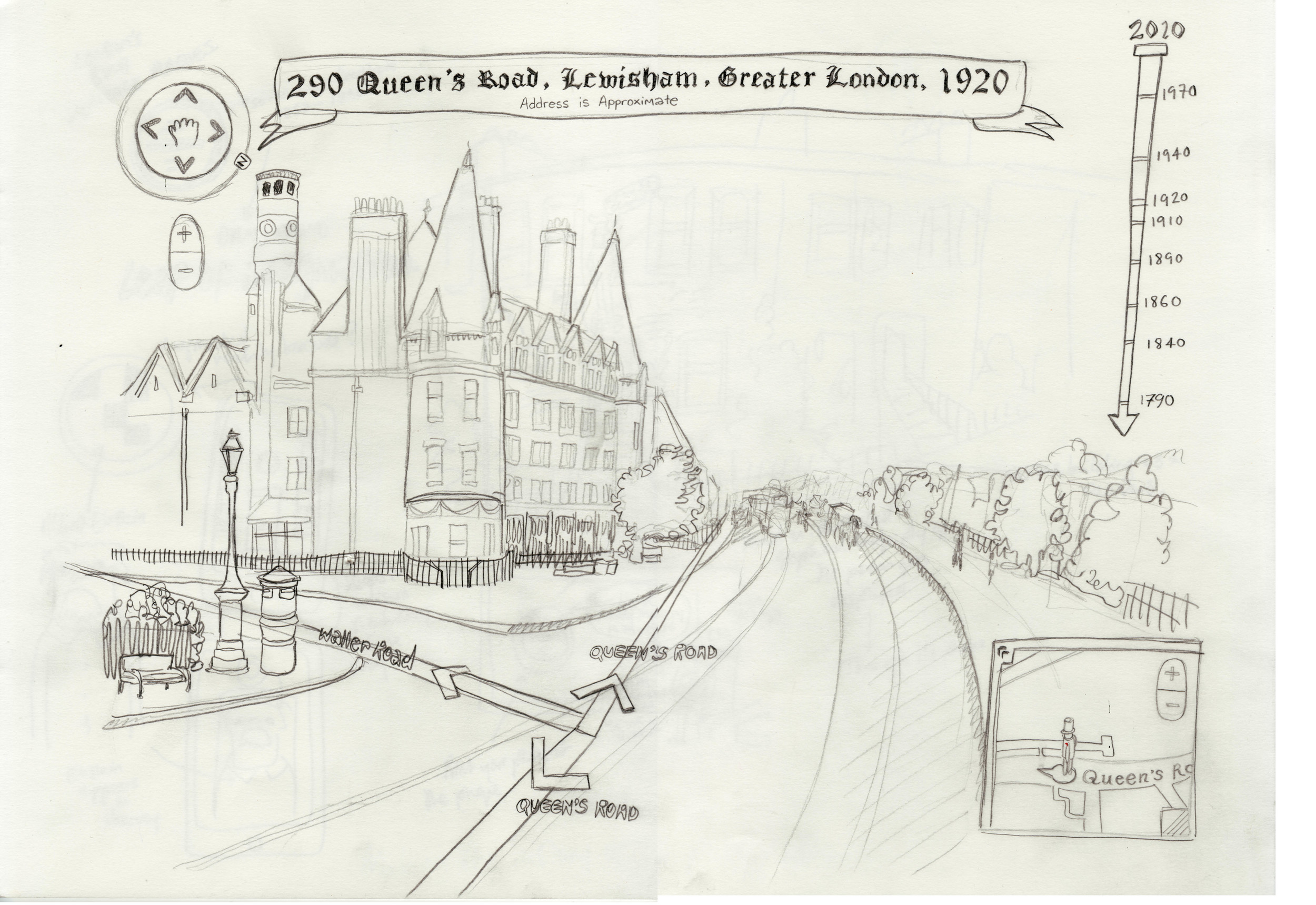
Aaghh, if I hadn't left this post so long I would detail my visits to Dennis Sevvers' house and Museum of London as well as my interview with a Medieval reenactor, but it will take forever...
Thinking about ways in which we memorialise things, I read a lovely quote by the lovely Stephen Fry: "We all pay lip service to the idea that yesterday makes today, but it is difficult to make the imaginative leap that truly connects us to our past... Blue Plaques, in their simple way, address this defect... for me, they are a unique imaginative portal into the past, for in my mind all Blue Plaques are contemporaneous, which is to say, the people commemorated by them are in their buildings now."
I love the blue plaque scheme too, but equally am always left faintly under-satisfied whenever I don't know who someone is, or their situation while they lived there. What if we could make their history more real, more visible?


After my visit to the Museum of London, seeing their London's Voices projects and also discovering the work of somewhere.org and Tom Hunter and James McKinnon's The Ghetto, I've become more interested in the idea of subjective histories or stories becoming part of a general community memory or consciousness. In Robbie (the medieval reenactor)'s words: The battle takes shape through a "multiplicity of subjective curators". And in the same way, a picture of a history (accurate or not) is painted on a woven tapestry of personal reminiscence. I LOVE this.

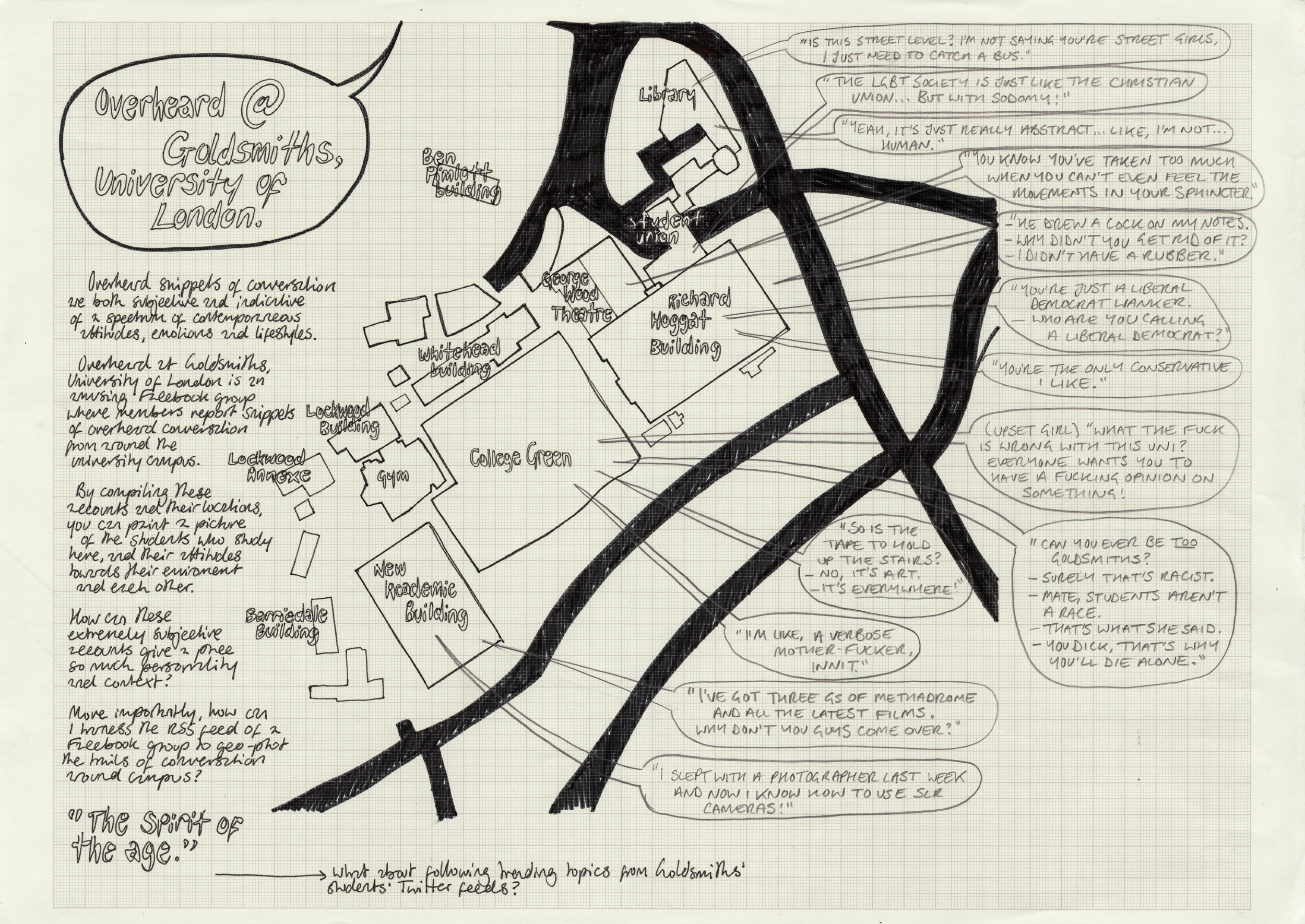
All of these thoughts and ideas are very much in their emryonic stages at this point, but I'm feeling pretty good about this.
My mantra has become 'Stories are inclusive'. Now I just need to find some stories!
Just for now...
"...Jameson was bold to link the politics of nostalgia to the postmodern commodity sensibility, and surely he was right (1983). The drug wars in Colombia recapitulate the tropical sweat of Vietnam, with Ollie North and his succession of masks- Jimmy Stewart concealing John Wayne concealing Spiro Agnew and all of them transmogrifying into Sylvester Stallone, who wins in Afghanistan- thus simultaneously fulfilling the secret American envy of Soviet imperialism and the rerun (this time with a happy ending) of the Vietnam war. The Rolling Stones, approaching their fifties, gyrate before eighteen-year-olds who do not appear to need the machinery of nostalgia to be sold their parents' heroes. Paul McCartney is selling the Beatles to a new audience by hitching his oblique nostalgia to their desire for the new that smacks of the old."
Modernity at Large, Arjun Appadurai (1996)
So... modelling week didn't quite happen...
It's been a weird week in which I have generally been procrastinating and desperately trying to avoid my project. Although I'm not quite sure why.
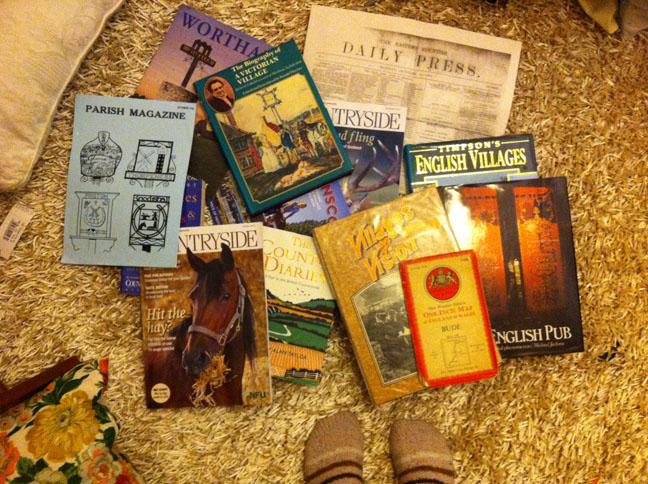
The reading is helping. Though every time I pick up a different book or magazine a million new avenues of exploration seem to open up and I find myself drowning in content.

My studio space is a hotch-potch of mini-projects I've been doing over this first half-term. These include:
- A briefing document
- A drawing source book
- A village tableau scene
- Several drawings of urban/rural fusion birdhouses
- A picture of a thatched flat-block
- Some laser-cut hand-illustrated sheep
- A Swallows and Amazons-esqe research trajectory map
There is a clear connection between all of these objects, but so far I have not quite pinned it down.

For this weeks' enterprise, I did a study of the iconography of English village signposts. I'm extremely interested in the imagery that communities use to identify themselves, and I'm sure I remember reading something by Viktor Papanek last year about the totems that Native American tribes used to rally around to enforce community bonds. (Note to self: look this up)
 It was really interesting to see what kind of icons recurred: churches, animals, pastoral/natural images, local landmarks, historical heroes, crests, dates and local industry symbols all featured highly as symbols of specific locations. This has made me give a lot of thought to the nature of collective identity: shared memory, traditions, experience. How is it represented and reinforced by tangible imagery? Does it really strengthen community bonds as it did for the tribal Indians in old America? What if the urban villages of London had a greater sense of collective identity?
 Could defining the identity of these areas in a similar way to small rural communities give the residents here a clearer sense of community?
Villages of Vision (and chocolate-box fraud)

Ok, so it's been a wee while since my last blogging enterprise. It seems I have fallen off the 'blog-horse'. Well, happily that doesn't mean I've not been doing anything...
Thanks to Gillian Darley that is. Villages of Vision has become the backbone of my research thus far. She talks about 'Picturesque' and 'Model' villages like I've never heard them described before.
During the early 19th Century, the wealthy middle-classes were becoming disenchanted with London's industrial cities. There was a rise in popularity of 'rural pursuits' such as hunting, rambling and making pretty watercolour paintings of the landscape (Gainsborough and the Dutch masters were to thank for this).
The leisure classes had decided to escape to the countryside, and the only way to do it was to become the smug owner of your own sprawling country estate, along with all the pomp and circumstance that this brought with it.

The countryside and the agricultural industries had been in a state of steady and inevitable decline for centuries. Many rural communities were poor, humble places where people struggled to farm a living- many of the houses in a state of collapse. Of course, for the new lords and ladies of the manors, it wasn't terribly pleasing to have a rag-tag settlement at the foot of one's grounds. The land-owners first began to 'prettify' these dilapidated buildings, and then eventually, to accompany their land with a brand-spanking new community: the chocolate-box English village.

And so the idea of the 'Picturesque' village was born. An image of rural utopia that still holds good to this day. To the city-dwellers, these villages represented an ideal, and land-owners had dreams of their own self-sufficient, semi-utopian communities that would showcase their wealth, taste and- incidentally- philanthropic enterprise.
Some key points of interest:
“The truly rural village retains an aura of attainable community, still representing a combination of rural escapism and human significance... an oasis into which the city people crawl thereby contributing to its disintegration.”
There were many series of 'pattern books' that offered guidelines and specifications for how to fulfil the picturesque cottage aesthetic. The detail in these guides was minute, from chimney designs right down to the types of creepers. The fashions detailed in these books became ever more outlandish, extravagant and eventually ludicrous; a mish-mash of architectural details adopted from a million different eras and countries.
The adoption of architectural styles of extreme irrelevancy is an escapist tendency. Good examples are Jacobean Railway stations and Mock gothic buildings of the Victorian era. All are evasions of reality, conformity and rationality which express the same reasons for the creation of fake villages and the recreation of rural life out of context.
The importance of these villages lies in the symbolism and associative qualities implied; the sense of community aligned closely with the settlement's aesthetics. "Picturesque villages are not just an anachronism. It's a logical response to and expression of certain needs; the wish for an environment which represents historical continuity, visual significance and emotional appeal."
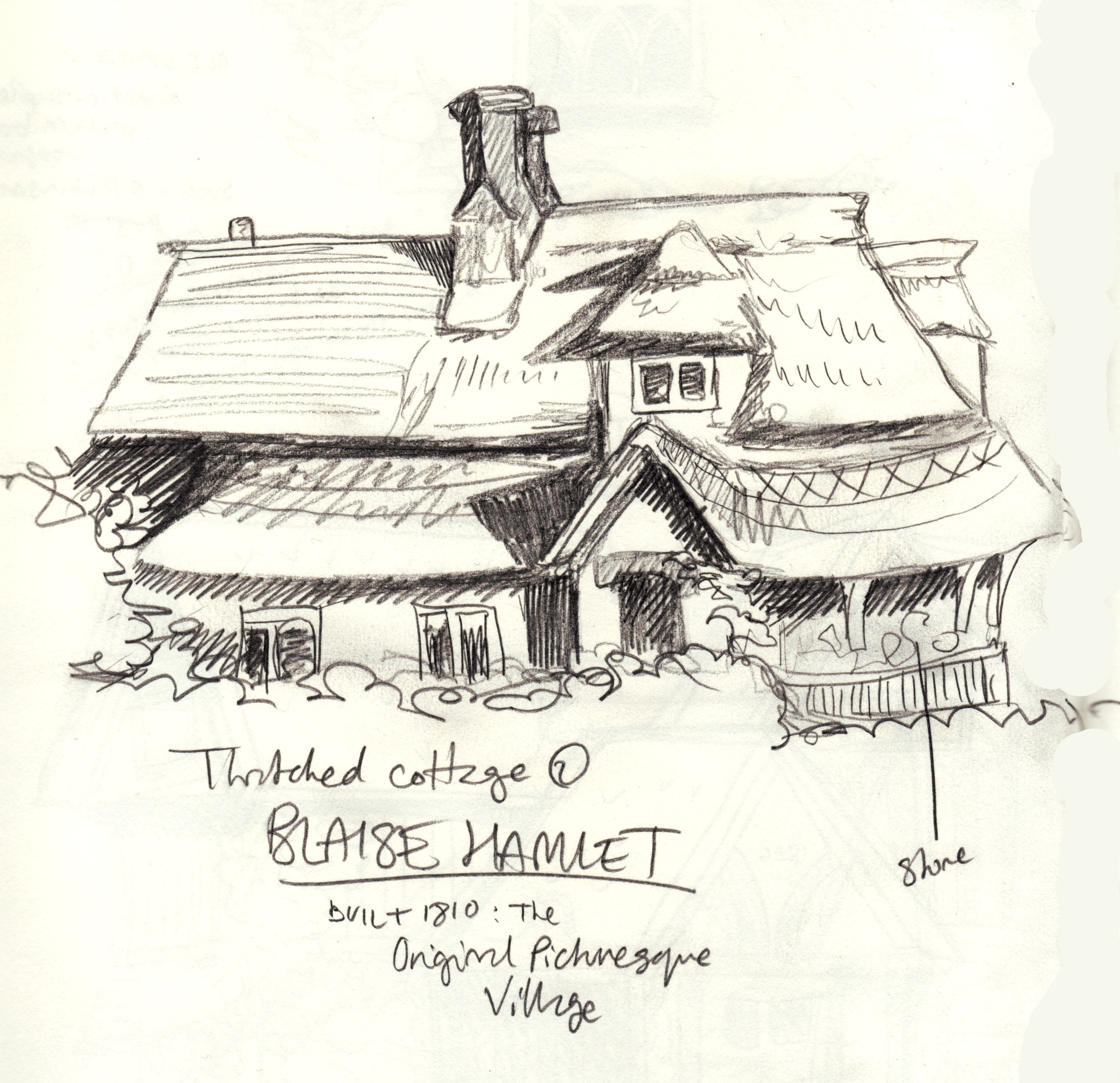
I have been exploring the idea that rural communities are perceived as the heart of some 'real' Britain, despite widespread urbanisation and the decline of countryside values. Now it seems that even the romantic vision of the chocolate-box English village with it's thatched-roofs and half-timbered frames is based on a fabrication. A fashion. A myth.
My oh my.
Some pretty nifty research tings....
 Yesterday, not really knowing where to begin with my research and desperately needing to leave my house, I headed off to the Tate Britain. Although not completely useful it at least set me on the right track. I have worked out that I am more interested in the PERCEPTIONS that we have about the countryside, the way its inhabitants DEFINE and PROJECT their identity, and what forms this takes.
I read an interesting piece courtesy the Museum of English Rural Life which attempts to tell the story of the 20th Century countryside through artefacts. [Ref. Onkar Kular- whose exhibition I Cling to Virtue blew my mind at the V&A last week] Rather than going down the usual plough wheels and farm machinery route however, they've chosen to exhibit some icons of the countryside that have transcended rural into mainstream culture. Examples are: 
The barbour jacket, "something that began as required wear for your average hunt follower, is now to be found being sported by Lily Allen and the like."
 The Land Rover: "which first appeared in 1948 as a general purpose farming vehicle but which subsequently managed to mutate into a fashionable vehicle of choice for the metropolitan elite."

...and the Aga, "which emanated from Sweden and was brought to this country in the 1920s. By the 1950s it had become indelibly associated with the farmhouse kitchen and from thence it became not only a style icon but a potent class symbol of the second half of the twentieth century."
I liked this statement best: "If the right Landrover or the right Aga come along with the right story, we’ll collect them." ...so I'll be making the trip down to this collection in Reading quite soon I think.
As well as this, my flatmate studies media, and happened to have a book entitled British Culture, which contains an essay entitled Rurality and English Culture by Alun Howkins. Convenient eh? From this essay, I've drawn out several of his key observations about how the British relate to ideals of rural life:

- The perception that rural life is in decline has rallied communities around a 'stirring and practically based image of threatened belonging'.
- Images of pastoral beauty have been ingrained in our national sense of identity chiefly by war propaganda. Posters and official war songs including 'There'll Always be England' and 'Bluebirds over the white cliffs of Dover', and the deliberate icon of the war memorial on the village green were used to rally England under a collective National ideology.
- Rural Britain is at the heart of an idealised vision of 'real' England. The countryside has certain aesthetic specifications: Rolling hills interspersed with woodland, hedgerows lining fields. "even more importantly its ideal social structure is village with its green, pub and church clustered together. Ideal architecture stone or half-timbered topped with thatch."
- "Aesthetics, ruralistic impulse and urban decline created our image of the 'real' England: “...even before the first World War, this ideal landscape had ceased to be an exact geographical location and had become instead a set of features by which rural beauty was defined. The bringing together, before the Great War, of an elite view of urban and rural decline, a ruralist impulse, and an aesthetic of the southern created an ideal of the countryside which, all too often and too easily become 'real' England.”
So the set of criteria for which we base our vision of the countryside- the 'heart of true England' is fabricated upon a set of upper-class aesthetics and lifestyle ideologies. I like the idea that there is a formula of British Countryside.
If the image of the real Britain is false, then is a community's collective identity just imagined too?
Material Definitions
[gallery columns="4"] Over my lifetime I have accumulated a lot of crap. Ragged cuddly toys I've owned since the beginning of time mold contently at the back of my cupboards; boxes overflowing with scraps of paper-tickets, doodles, letters, certificates gather dust on top of shelves; nick-nacks, torn-up books, photographs I'll never put in frames and bits that have fallen off other bits that I won't throw away just in case they come in useful again adorn every available surface.
I love clutter. I immerse myself in these bits of junk that mean nothing and everything. I collect antique cameras that I never uses, broken watches I'll never repair, and stacks upon stacks of books that I'll probably never read. Why?
I am fascinated by the qualities we project onto our possessions. I'm sure this sounds familiar. Marxist theories of Commodity fetishism have been boggling my mind for a while now, and my interest in human relationships with their material environment has been ongoing since I can remember.
They say that the whole is greater than the sum of its parts, and I believe this statement applies to personal expression through possession perfectly. That is to say, a single book; a single pen, a lamp or chair would not go far in defining a person's character as a whole. However, when put together, a selection of miscellaneous objects can weave a portrait with their symbolism, their attributed qualities, the roots of their implications.

How do we read a person's possessions? How do we draw conclusions about intangible assets through readings of tangible ones? How do we select what we consume by way of expressing the way we see ourselves, and how accurately do our possessions reflect the truth about us? Are we influenced in our opinions of others through what they own? How can we use objects to construct a narrative around an individual?
Impostor Syndrome
 "impostor syndrome, sometimes called impostor phenomenon or fraud syndrome, is a psychological phenomenon in which people are unable to internalize their accomplishments."
This common psychological condition tends to affect high-achievers, academics and other individuals who most often could be considered in some way successful or accomplished. The victim of 'impostor syndrome' feels like a fraud, at risk of being discovered and exposed out at any time. Symptoms include:
- Dreading others' evaluations of your work or character
- Fear of not meeting others' expectations
- Attribute achievements to luck or mistake
- Rarely feel proud of a completed project or task
- Feel as though they should have accomplished more
- Fear of not being able to repeat a success
- Over-preparation, procrastination and making excuses
It is not an officially recognised psych. disorder, actually still a condition belonging to the 'pop psychology' bracket. Despite this, there have still been many extensive investigations made into its symptoms, causes and effects. Opinions differ, some believing it to be a cultural phenomenon:
"...people are left on their own, competition is intense, and there’s not much of a mentor system. They live in fear they won’t ever be good enough.”
I first read about the phenomenon a few months ago. It was in The Evening Standard or some other free paper I was reading on the bus on my way home. That particular article went on to say that the condition is gender indiscriminate, but has a tendency to strike far more women than men.
The explanation for this is that these thoughts, or the triggers for these thoughts are far more ingrained in the psychological make-up of a woman. Women tend to be far more critical and self-critical, because hundreds of years of human society has trained us to be that way. Traditionally, the woman who must secure a husband to have children, be accepted, survive. It would be the woman to leave her family and move in with her husband's, and had to keep everybody happy or risk being thrown out. This has resulted in a survival instinct to self-critique and check her behaviour constantly.
I'll confess to experiencing some of these thoughts and feelings. But how interesting the concept that anyone should fear being 'found out' of being themselves.
Surely design could do something to help or explore this? Interesting research anyways...
You can download a test to see if you're a sufferer here.
Small Town Syndrome
I'm from Norfolk. When people find this out they generally ask me [in a thick and ill-conceived West Country accent] do I live on a 'faaaaaarm', is my brother is my cousin and whether I have webbed toes.

Home is a small town on the Norfolk/Suffolk border called Diss. It has a population of around 7,000. Everybody knows everybody else. We use phrases like "that's on the 'huh" [it's a bit wonky] and describe things as "a rum do" [what a strange occurence]. Most people get married young and have babies. And yes, most people have a lot of cousins.

It is easy to make generalisations about a place, but as they say- there's no smoke without fire.
- Why are Northerners friendly and Southerners miserable?
- What changes a dialect, an accent- where do slang words originate and evolve?
- Why does a lifestyle differ from place to place?
- How did we come to forge these stereotypes?
OK, OK... so the socio-cultural, political, economical and environmental factors are obvious and hugely variable. That's not a project; that's common-sense.
What I'm interested in rather, is how behaviour begets behaviour in a small-town environment, and to focus on the material and tangible repercussions of collective social phenomena.

I want to investigate what causes localised mindsets and values, how our social networks (the figurative ones, not the digital ones I mean) cause us to think and act in certain ways;
- What are the effects of growing, living, interacting within a small, familiar community?
- How does that change the behaviour of an individual, or of a group, or even a whole neighbourhood?
- Why do we form perceptions of regions, and how do the ripple effects of close social networks manifest themselves?
- How does our environment effect us as individuals, and how does this in turn reflect on our environment?
- Would it be possible to use these patterns as a template to make predictions about a person's future?
Nicholas Christakis believes that traits are contageous. That we can 'catch' happiness and spread behavioural patterns such as over-eating or drug abuse through complex and enormous social networks. His theory is that these networks we exist within significantly affect our lives.
THIS SOUNDS FLIPPIN INTERESTING DOESN'T IT?
Why Do Rational People Hate to Tempt Fate?
Superstition is embedded in us. I recently read this article at Spring.org.uk "We absorb superstitions from around us, especially vigilant for their occurrence and reinforced by any events that fit the pattern, conveniently forgetting events that don't fit."

Logical people do not want to wear a murderer's jumper (Sean Hall- find notes)
When we're kids we can believe that our toys might come alive at night, that Father Christmas comes down the chimney or that there's a monster under the bed. It is only after we accumulate experience that our sense of 'magic' is dispelled and we begin to lose our naivity and willingness to believe in phenomena.
Aside from things like religion, paranoid UFO enthusiasts and superstitious old ladies (let's call these cases to compare against) we mostly live in an age and culture of cynicism and disbelief.
What interests me about the above article, is that it suggests that rather than being merely naivity or a willingness to believe in irrational phenomena it is something that is imbedded in us- part of our psychological make-up. If this is true I'd like to know why, how this might have manifested itself throughout time, and how I might be able to exploit this fact to recapture the imagination of even the most disenchanted critic.
I want to research and investigate ways in which superstition, mythology and fantasy form an integral part of the tapestry of our lives. Folklore and stories affecting behaviour- social ritual and ceremony.
How can I weave a bit of magic back into life?

- Immersive environments,
- experiential design,
- artefacts.
- Ways in which superstitions are already exploited.
- Psychological causes and effects of superstition
Wells Blog
Duis mollis, est non commodo luctus, nisi erat porttitor ligula, eget lacinia odio sem nec elit. Maecenas faucibus mollis interdum. Nulla vitae elit libero, a pharetra augue.


Commodo cursus magna, vel scelerisque nisl consectetur et. Donec id elit non mi porta gravida at eget metus.