
MINIATURE VILLAGE!
Last Wednesday I took myself off for a little jaunt around Bekonscot Miniature Village . It was flippin awesome.
[gallery columns="4"]
The place is huge, and no detail's been spared. This microcosm of the 'village world' captures the essence of rural British communities: choc full of the standard landmarks: churches, local businesses, farms, pubs, village greens. Every landscape sees tiny sculpted people going about their daily lives: There's a hunting party, cricket players on the green, kiddies around the maypole, morris dancers in the village square; church-goers, gypsy camps, drunk old men at the pub, old ladies hanging out the washing.... a neat little summary of the cliché of country life.
What gets me about these clichés... they're not just clichés. These are traditions, environments and scenarios which are deliberately practiced and reinforced by the country-folk. They bring greater value, and greater meaning to their way of life and the way they see themselves.
The miniature village is the perfect demonstration of the symbols and associations with which the typical countryside community communicates itself. So what do these symbols mean to people, what effect do they have, and could their associative qualities and effects be just as powerful if applied in the outside world?
Empathic Nostalgia of the 1970s Wristwatch
Two wonderful friends of mine bought me this little beauty for my birthday last August. Bling bling BLING. I wasn't even born when these were released, so why do I feel like I should be wearing a school dress and throwing paper aeroplanes around when I'm wearing it? Aah, the wonderful sensation of Consumer Fetishism. Cool as hell.


Here are some other extremely fandangulous examples of retro time-pieces...


L-R: Old Stock Lanco Direct Time: the Swiss answer to the LED in the mid Seventies (£150); Classic Camif Early 60's Dress Watch (£85)


L-R: Old Stock Gruen LED (£250); 1980's Chromachron Quartz Watch (£235)


L-R: Baschmakofff Direct Time Automatic 1974 (£550); Amida Digitrend Direct Time Steel Watch (£750)
....and the Mac Daddy:

A new, hand made "Nixie Tube" clock.
These were the "digital" display tubes that you used to see when watching the Apollo missions in the 60's. In fact some of these tubes were originally NASA ones! Inside a glass tube, ten filaments are shaped to form the digits 0 - 9 which when lit give off a warm orange / violet glow that can be read from quite a distance...
All images and price references courtesy 70s-watches.com. This guy has way, WAY too many watches. It makes me extremely happy.
The Catastrophic Effect of Ugly Wallpaper
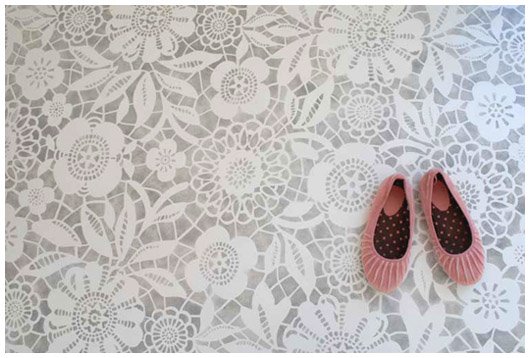
As designers, we are taught that beauty for beauty's sake is useless, and that purely decorative or ornamental artefacts are frivolous and valueless.
Oscar Wilde was one of the leaders of the late 19th Century aesthetic movement. Whilst touring the USA during the civil war, was asked why he thought America had descended into violence. His answer was simple: "because you have such ugly wallpaper".
The argument runs that human beings have done our best to despoil the greatest beauty available - nature. Compounding that is the fact that so many of us choose to live in 'ugliness' created by ourselves, so what must that do for our sense of self worth and how we value others? And finally, living in ugliness, and devaluing ourselves and those around can only, eventually lead to violence...
I like this line of thought particularly because it makes explicit the fact that we do value our surroundings, the things we own and use, and the relationships between all these things. We spend our lives building an identity - for the outside world, and for our internal world. And we do this through the stories we tell about ourselves, and also through the objects we collect around ourselves. Through an implicit and explicit selection process we build a visual version of ourselves that we trust to help tell our stories ...

I love to make things beautiful. I can't help it. I love twiddly, pointless detail. Irrelevant imagery that adds some intricacy, some added-interest, and some character to the banal and irrelevant materialism that we use to define ourselves.
I would not describe myself as a materialistic person, yet I surround myself with objects that I feel are beautiful and improve my mood and my perception of myself. My room is a mess of art books, antique cameras and wristwatches, and my walls are consistently adorned with an ever-changing rotation of beautiful imagery that strengthen my personal identity and help me communicate my traits, values and interests to others.
Why this compulsive fetishisation of material goods? Goods that are not even representative of wealth or allude to a successful or luxurious lifestyle?

My question is: can surrounding ourselves with beauty, and treating beauty as though it were an essential component of our relationship with our physical environment improve the quality of our relationships with our not only our habitats but ourselves and others?
Aesthetism: The artists and writers of the Aesthetic movement tended to hold that the Arts should provide refined sensuous pleasure, rather than convey moral or sentimental messages. As a consequence, they did not accept John Ruskin and Matthew Arnold's utilitarian conception of art as something moral or useful. Instead, they believed that Art did not have any didactic purpose; it need only be beautiful. (from Wikipedia)
Wells Blog
Duis mollis, est non commodo luctus, nisi erat porttitor ligula, eget lacinia odio sem nec elit. Maecenas faucibus mollis interdum. Nulla vitae elit libero, a pharetra augue.


Commodo cursus magna, vel scelerisque nisl consectetur et. Donec id elit non mi porta gravida at eget metus.