
So... modelling week didn't quite happen...
It's been a weird week in which I have generally been procrastinating and desperately trying to avoid my project. Although I'm not quite sure why.
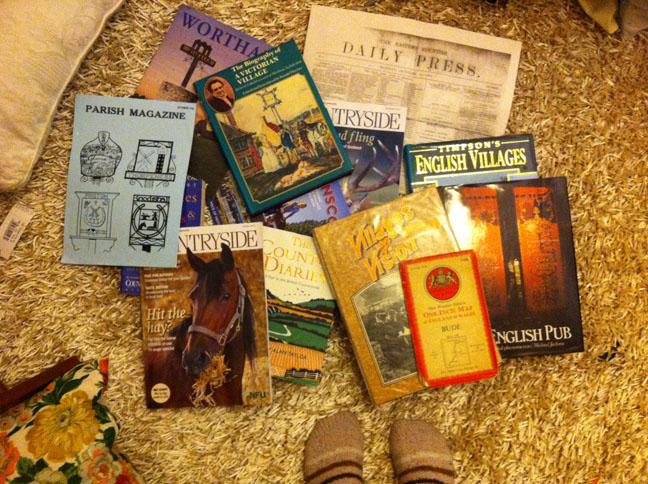
The reading is helping. Though every time I pick up a different book or magazine a million new avenues of exploration seem to open up and I find myself drowning in content.

My studio space is a hotch-potch of mini-projects I've been doing over this first half-term. These include:
- A briefing document
- A drawing source book
- A village tableau scene
- Several drawings of urban/rural fusion birdhouses
- A picture of a thatched flat-block
- Some laser-cut hand-illustrated sheep
- A Swallows and Amazons-esqe research trajectory map
There is a clear connection between all of these objects, but so far I have not quite pinned it down.

For this weeks' enterprise, I did a study of the iconography of English village signposts. I'm extremely interested in the imagery that communities use to identify themselves, and I'm sure I remember reading something by Viktor Papanek last year about the totems that Native American tribes used to rally around to enforce community bonds. (Note to self: look this up)
 It was really interesting to see what kind of icons recurred: churches, animals, pastoral/natural images, local landmarks, historical heroes, crests, dates and local industry symbols all featured highly as symbols of specific locations. This has made me give a lot of thought to the nature of collective identity: shared memory, traditions, experience. How is it represented and reinforced by tangible imagery? Does it really strengthen community bonds as it did for the tribal Indians in old America? What if the urban villages of London had a greater sense of collective identity?
 Could defining the identity of these areas in a similar way to small rural communities give the residents here a clearer sense of community?
