
Back on the blog-horse.
It's been a long two weeks, and despite my blog neglection it has been pretty busy too. It's been particularly interesting on the contextual front, and a wealth of new and very clever stuff has implanted itself in my brain courtesy of people like Benedict Anderson and Arjun Appadurai. On top of this, some very clever and inspiring artists like Karen Guthrie and Nina Pope, Tom Hunter and James McKinnon, as well as Goldsmiths' very own Pete Rodgers have given me more than my fair portion's food for thought. But, if I go on like this the word count of this blog post will be longer than my dissertation.
So what follows is a very brief summary of how my project has changed and evolved over the last two weeks or so. I really hope it makes sense...
Last week I wrote a bit about Urban myth and legend, having been interested in Nessie and the Black Shuck of Norfolk/Suffolk. I came to wondering about how a character comes to exist on a level of communal consciousness, and how a locality's desire to make tangible some recognition of its existance- within their minds- results in a system of half-belief: we know it's not real yet we like to treat it as though it could be. In other words, we'd like to remember it that way. In Bungay, the local running club is named after a hell-hound.
"The long-term reproduction of a neighbourhood that is simultaneously practiced, valued and taken-for-granted depends on the seamless interaction of localised spaces and times with local subjects possessed of the knowledge to reproduce locality." (Appadurai, 1996)
From here, I've become extremely interested in collective memory, knowledge and remembering. I've already discovered a lot of evidence that suggests that familiarity within our environments (knowing the history, people, stories and physical spaces) precipitates contentedness and community. It is almost certainly this that makes the tight-knit rural communities of England seem so ideal. They visualise and mark their history, they tell stories and talk about local heroes and gossip. Adapting Marx: "local knowledge is not only in itself, but of itself."
So I've been investigating communal knowledge, memory (Benedict Anderson has some wonderful things to say on the subject of Imagined Communities) and nostalgia. Why and how we preserve and value the past, and ways in which we live our history alongside our present.

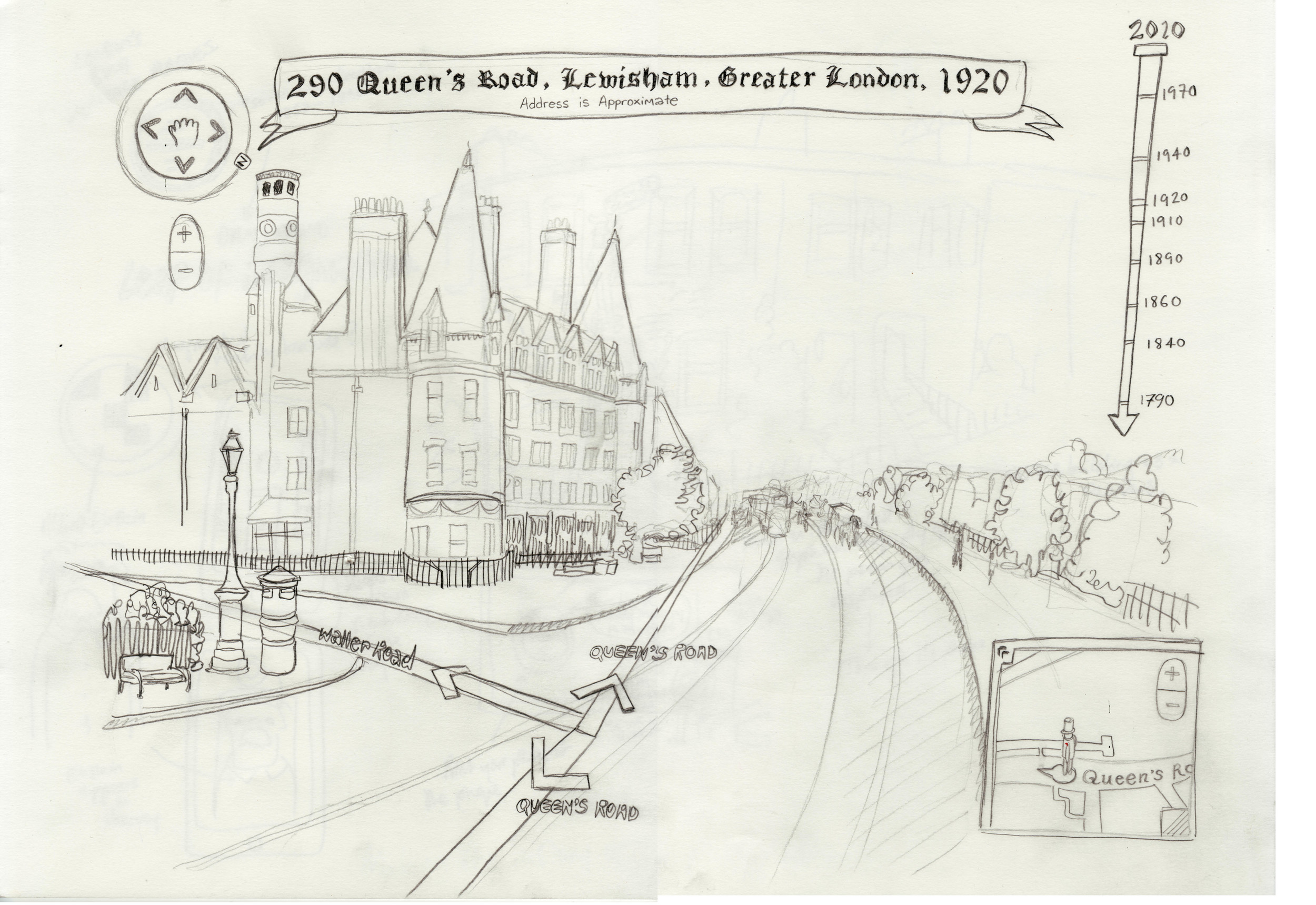
Aaghh, if I hadn't left this post so long I would detail my visits to Dennis Sevvers' house and Museum of London as well as my interview with a Medieval reenactor, but it will take forever...
Thinking about ways in which we memorialise things, I read a lovely quote by the lovely Stephen Fry: "We all pay lip service to the idea that yesterday makes today, but it is difficult to make the imaginative leap that truly connects us to our past... Blue Plaques, in their simple way, address this defect... for me, they are a unique imaginative portal into the past, for in my mind all Blue Plaques are contemporaneous, which is to say, the people commemorated by them are in their buildings now."
I love the blue plaque scheme too, but equally am always left faintly under-satisfied whenever I don't know who someone is, or their situation while they lived there. What if we could make their history more real, more visible?


After my visit to the Museum of London, seeing their London's Voices projects and also discovering the work of somewhere.org and Tom Hunter and James McKinnon's The Ghetto, I've become more interested in the idea of subjective histories or stories becoming part of a general community memory or consciousness. In Robbie (the medieval reenactor)'s words: The battle takes shape through a "multiplicity of subjective curators". And in the same way, a picture of a history (accurate or not) is painted on a woven tapestry of personal reminiscence. I LOVE this.

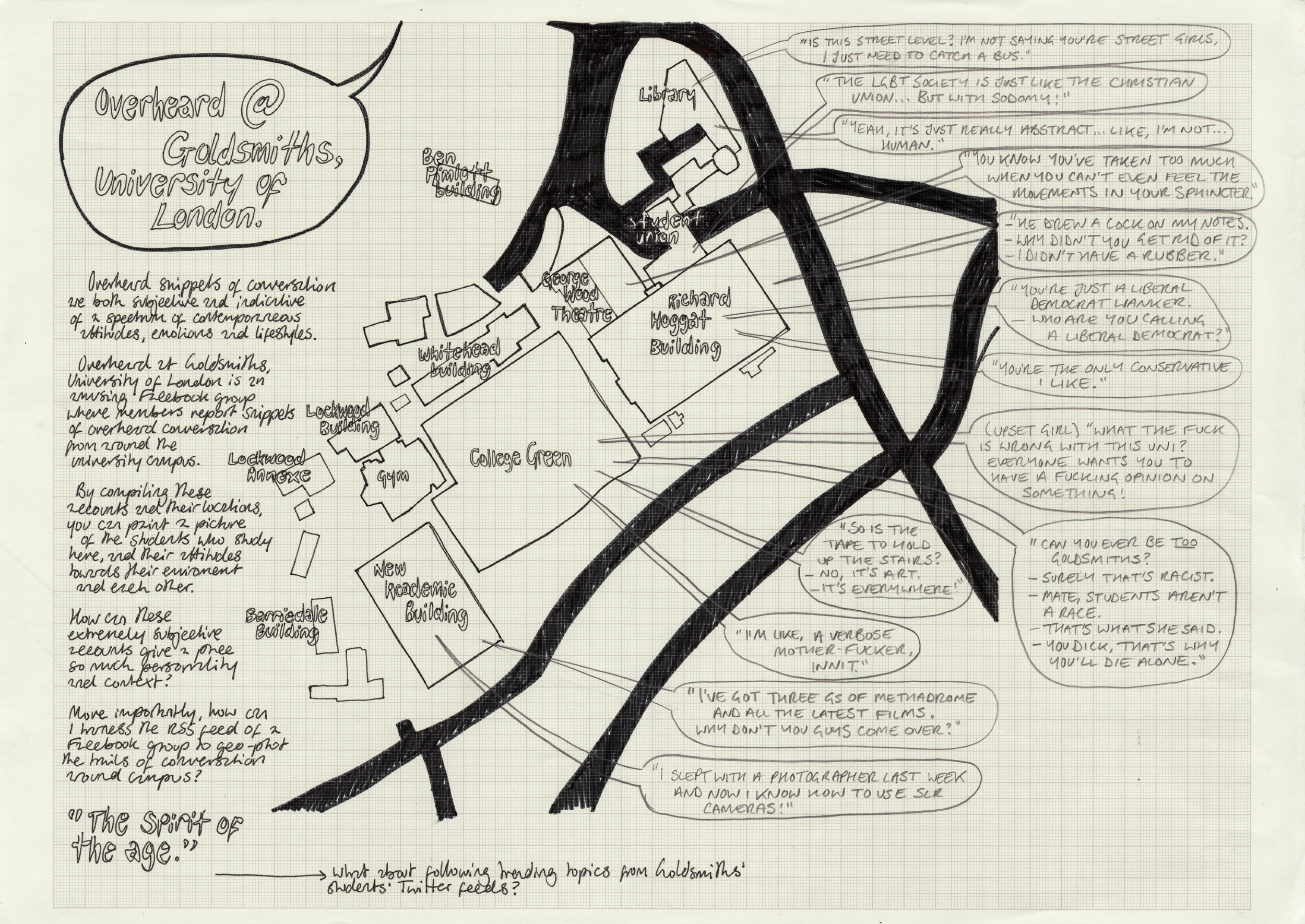
All of these thoughts and ideas are very much in their emryonic stages at this point, but I'm feeling pretty good about this.
My mantra has become 'Stories are inclusive'. Now I just need to find some stories!
Just for now...
"...Jameson was bold to link the politics of nostalgia to the postmodern commodity sensibility, and surely he was right (1983). The drug wars in Colombia recapitulate the tropical sweat of Vietnam, with Ollie North and his succession of masks- Jimmy Stewart concealing John Wayne concealing Spiro Agnew and all of them transmogrifying into Sylvester Stallone, who wins in Afghanistan- thus simultaneously fulfilling the secret American envy of Soviet imperialism and the rerun (this time with a happy ending) of the Vietnam war. The Rolling Stones, approaching their fifties, gyrate before eighteen-year-olds who do not appear to need the machinery of nostalgia to be sold their parents' heroes. Paul McCartney is selling the Beatles to a new audience by hitching his oblique nostalgia to their desire for the new that smacks of the old."
Modernity at Large, Arjun Appadurai (1996)
Future Nostalgia?
I've found a DIAMOND book in the library, The Countryside Ideal by Michael Bunce. It's basically about the idealisation of rural life in Anglo-American culture. ie: why we idealise the countryside, how we idealise it and the projections and assumptions that we make about life there. It discusses how attitudes toward the countryside are as a result of urbanism and industrialisation. If the population of Britain's countryside continues to grow at such an alarming rate (3x the rate of urban environments) and if we continue to aspire to a 'simple, quiet' life in the country, it's not going to be too long until what remains of the rural idyll captured in the national mind's eye is nothing but a story. A myth left over to tell the grandchildren about. It's already happening.
I watched this the other day. It featured a village whose history spanned a thousand years, and in the 1930s featured in a movie showcasing it as a rural utopia- the perfect escape for the middle classes. Years on, the programme takes a look at the same village, talking to a farmer whose old cow-shed is now a £700,000 barn conversion and a city-worker whose two-hour commute home at night crosses paths with a local builder who can trace his family back through the village six generations as he returns to town- no longer able to afford to live the picturesque ideal that is his heritage.

I know I've already rambled about the genius of Will Self's The Book of Dave a few times, but I dragged it out yet again to have a look through the maps in the front. Visions of London underwater at an indeterminable point in the future. It's full of social and cultural references to the present day. Misremembered and misinterpreted scraps of information and tradition that live on in a broken, fragmented kind of way amidst the new, future culture of Ing (England).
Why do we reflect on lost times and ways of life and elevate them as ideals? Why will yesterday always seem better than today? Countless historical sites stage historic reenactments. Kentwell Hall in Suffolk is the first that springs to mind. During the summer months, they employ around 70 full-time Tudors who work the land and run the house as they did in the 1500s. Tales of a lost time, when things were simple, folks worked hard and were happy, and wore silly costumes and spoke silly words.
I remember visiting Kentwell Hall on a school trip when I was really small. Completely overwhelmed with the place, my childhood imagination reveled in the idea that I had actually been transported back in time; that these people were actual Tudors. It was wonderful... until I spotted the strip lighting on the ceiling inside one of the cattle sheds. The boards covering it over had not been replaced properly, and the illusion of my escape into another time was shattered.
In as little as thirty years time, it's likely what remains of the culture and traditions of the Countryside will have been warped beyond all recognition. After all, its the people that these qualities live through- not a tangible landscape or object. So, in our future attempts to uncover the lost vision of Britain's countryside what assumptions will we make about it? Will the children of 2050 sit through an granny-style afternoon tea or a Harvest Festival with the same detatched sense of awe that I felt about the ladies churning the butter in Kentwell gardens? Will it be the same? And what form will our idealised communities now take? We're already stumbling into a future where idealised rural-living is artificial, misplaced and misinterpreted (like this), so what will they look like by then?
God of all things good, Russell Davies had a great idea with his Lyddle End project, where he took the charming railway models of fictional picturesque Lyddle End village and asked artists and designers to remodel them as they'll look in 2050. I love this idea that the chinese-whisper effect of history will contort the recognised into something alien. Also, read this. Oh, isn't he so very clever?

So, more stuff to look into. I want to find out more about these funny folks who dress up and relive history in a variety of weird and wonderful ways, and just why they do it. The escapist element is obvious, as is the nostalgic one. But I'm mostly interested in the inaccuracies of what they do. The fuck-ups and faux-pas of the reenactments. Is it the accuracy that matters to them? Or just the illusion that they have- just for a short time- the undesirables of living life today.
If anyone reads this (in my optomism that anyone makes it this far through my rambling) and has any suggestions for reenactment events or venues, or better- knows anyone who likes to get dressed up and have sword-fights I'd love to hear from them. The closest I've come to experiencing this was my 18-month flirt with WOW. And I don't think that quite counts...
Wells Blog
Duis mollis, est non commodo luctus, nisi erat porttitor ligula, eget lacinia odio sem nec elit. Maecenas faucibus mollis interdum. Nulla vitae elit libero, a pharetra augue.


Commodo cursus magna, vel scelerisque nisl consectetur et. Donec id elit non mi porta gravida at eget metus.